
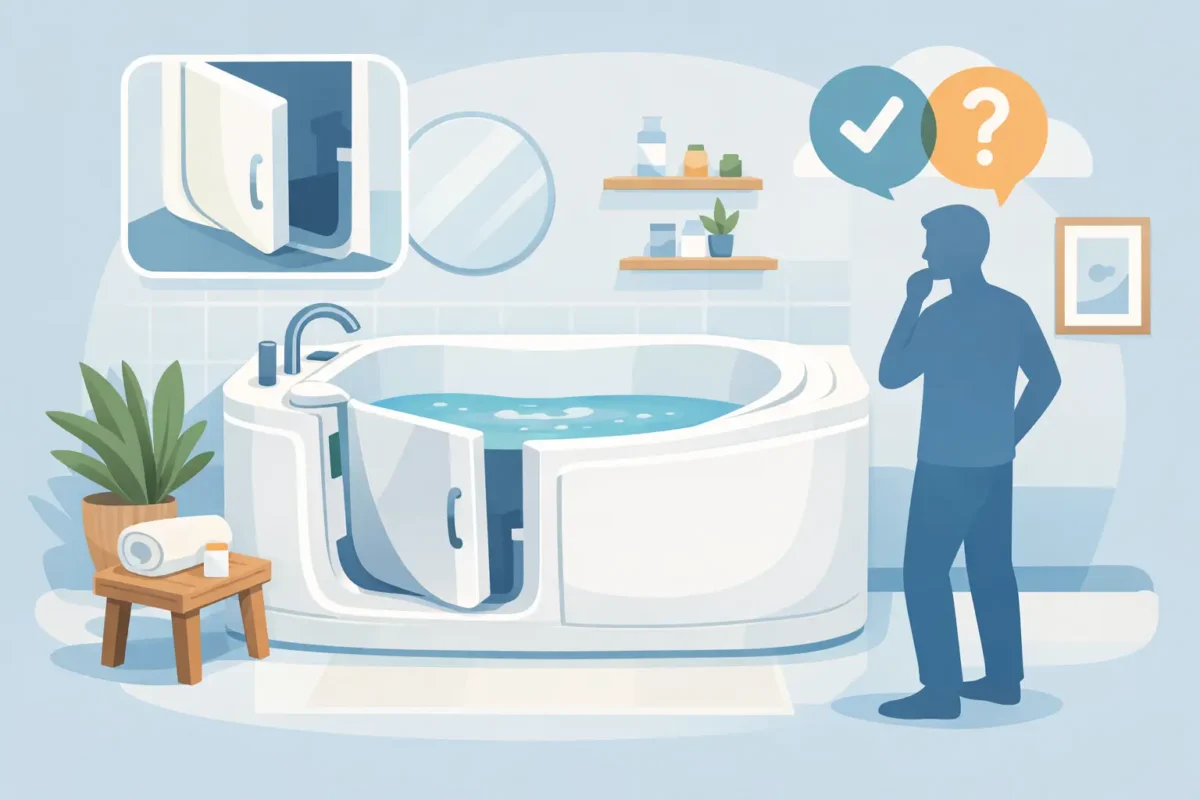
A high tub wall can turn a familiar daily routine into a source of worry. If you or a loved one is steady on most days but struggles to lift a leg over a traditional bathtub, an inward swing door tub may provide a safer, more comfortable way to continue bathing at home.
This type of walk-in tub is designed around a simple goal: reduce the risky step into the bath. Instead of climbing over a tub wall, the bather opens a watertight door, steps across a low threshold, sits down, and closes the door before filling the tub. For many homeowners, that change can support independence without requiring a move or a complete change to their daily routine.
Still, the door direction matters. An inward-swinging door is a practical fit for many bathrooms, but it is not automatically the right fit for every person, floor plan, or mobility need.
How an Inward Swing Door Tub Works
An inward-swing door opens into the tub basin. Once the bather steps inside and is seated, the door is pulled closed and sealed. The tub is then filled, and it must be drained before the door can be opened again.
This design is common in walk-in tubs because the water pressure inside the filled tub helps hold the door against its seal. It also means the door does not need open floor space in front of the tub. In a smaller bathroom, where the toilet, vanity, or a narrow walkway limits clearance, that can be a meaningful advantage.
Most inward-swing door tubs include a built-in seat, grab bars, a low entry threshold, and controls positioned within reach of the seated bather. Depending on the model selected, homeowners may also choose features such as handheld shower wands, fast-drain systems, heated seating, air jets, or water jets. The best combination depends on the person using the tub, not simply on which features sound appealing.
Why Door Direction Deserves Careful Thought
An inward-swinging door saves space outside the tub, but it uses space inside the bathing area. The person entering needs enough room to step in, turn, and position themselves on the seat before closing the door. That is usually manageable for someone who walks independently or uses a cane, but it may be more difficult for a person with significant balance limitations, limited leg movement, or a larger body frame.
The right choice also depends on whether someone will need assistance while bathing. A family caregiver may be able to help a loved one enter and settle into an inward-swing tub, but the exact setup should be considered carefully. If a person requires a wheelchair transfer, a transfer bench, or hands-on support from another adult, an outward-swing door tub or a roll-in shower may provide easier access.
There is no single accessible bathing solution that works for every household. A good bathroom remodel begins with an honest look at current needs and the changes that may happen over the next several years.
Benefits of an Inward Swing Door Tub
For the right homeowner, an inward-swing door tub offers several practical benefits. The low step-in threshold reduces the need to climb over a high tub wall, which is often where slips and loss of balance occur. The integrated seat lets the bather wash while seated, reducing the strain of standing on a wet surface.
Because the door swings into the tub, the bathroom does not need extra clearance for an outward-opening door. That can make this style especially useful in an existing bathroom where the goal is to improve safety without expanding the room. Many Eastern Shore homes have bathrooms with limited square footage, and a well-planned tub replacement can make a substantial difference without moving walls.
Comfort is another reason homeowners consider this option. Warm-water soaking may help some people relax after a long day or ease everyday stiffness. A handheld shower wand can also make rinsing and personal care simpler from a seated position.
Just as important, a walk-in tub can help preserve privacy. Being able to bathe with less assistance can be reassuring for older adults and for families who want to support a relative’s independence at home.
When a Different Accessible Bath May Be Better
An inward swing door tub has limitations that should be discussed before installation. The bather must enter the tub before the water starts and remain inside while it drains. Fast-drain systems can shorten that wait, but the person still needs to be comfortable sitting in place for the entire bathing process.
Interior space is another consideration. The door opening can reduce the available room inside the tub, so it is wise to review the actual dimensions of the selected model rather than assuming all walk-in tubs feel the same. Trying to accommodate a future need with a tub that is too tight today can create frustration instead of confidence.
A low-threshold shower may be a better fit for someone who does not enjoy soaking baths, needs more room to move, or uses a mobility device. A custom accessible shower can be designed with a wide entry, built-in seating, secure grab bars, a handheld showerhead, and a layout that better accommodates caregiver support. In some cases, a tub-to-shower conversion is the safer and more convenient long-term answer.
The goal is not to choose the most feature-filled product. It is to create a bathing space that feels safe, manageable, and comfortable for the person who will use it every day.
What to Evaluate Before Choosing an Inward Swing Door Tub
Start with the bather’s daily movement, not the bathroom fixture. Consider how easily the person can stand, pivot, bend, and lower themselves into a seated position. Think about whether they currently use a cane, walker, wheelchair, or assistance from another person. These details help determine whether the entry, seat height, door placement, and controls will be practical.
Next, evaluate the room itself. Measurements matter, but so does the path into the bathroom. A tub may fit within the room while still being difficult to bring through a narrow hallway or doorway. The placement of the toilet, vanity, door swing, electrical outlets, plumbing, and nearby storage all affect the final design.
It is also helpful to discuss the home’s existing plumbing and water-heating capacity. Walk-in tubs can hold more water than a standard bath, so the water heater may need to be evaluated. Professional installation should also account for drainage, proper electrical requirements for powered features, wall protection, flooring, and safe grab-bar placement.
Finally, consider who may use the bathroom in the future. A bathroom built only around a temporary issue can become limiting later. Planning ahead does not mean overbuilding. It means selecting a solution that supports comfort now while giving the household a reasonable margin for changing mobility needs.
Installation Quality Makes the Difference
An accessible tub is only as dependable as the installation behind it. The tub must be level, securely connected, properly sealed, and tested for drainage and operation. Surrounding walls and flooring need to be finished in a way that handles moisture and makes cleaning manageable.
Camden Enterprises helps homeowners throughout Maryland’s Eastern Shore evaluate accessible bath options based on their space, mobility needs, and budget. A personalized consultation can clarify whether an inward-swing tub, outward-swing model, or accessible shower will offer the best daily experience. Financing options, including qualified offers for 100% financing and 0% interest for 18 months, may also help families move forward with needed improvements sooner.
A safer bath should not feel institutional or temporary. With thoughtful planning, it can become one of the most comfortable rooms in the home. If stepping over the side of a bathtub has become a concern, the next helpful step is a conversation about the person, the space, and the bathing routine that needs to work better.