
A shower should be a place to start or end the day comfortably, not a place where a slippery floor, fatigue, or limited balance creates worry. The right shower seat installation options can make bathing safer and more independent without making the bathroom feel clinical. For many Eastern Shore homeowners, a seat is a practical part of staying in the home they love as needs change.
The best choice depends on more than the available space. A secure installation must account for the shower layout, wall structure, user needs, cleaning preferences, and whether the bathroom is part of a larger accessibility renovation. A seat that looks convenient but is not properly supported can create a serious safety concern. Thoughtful planning makes all the difference.
Shower Seat Installation Options to Consider
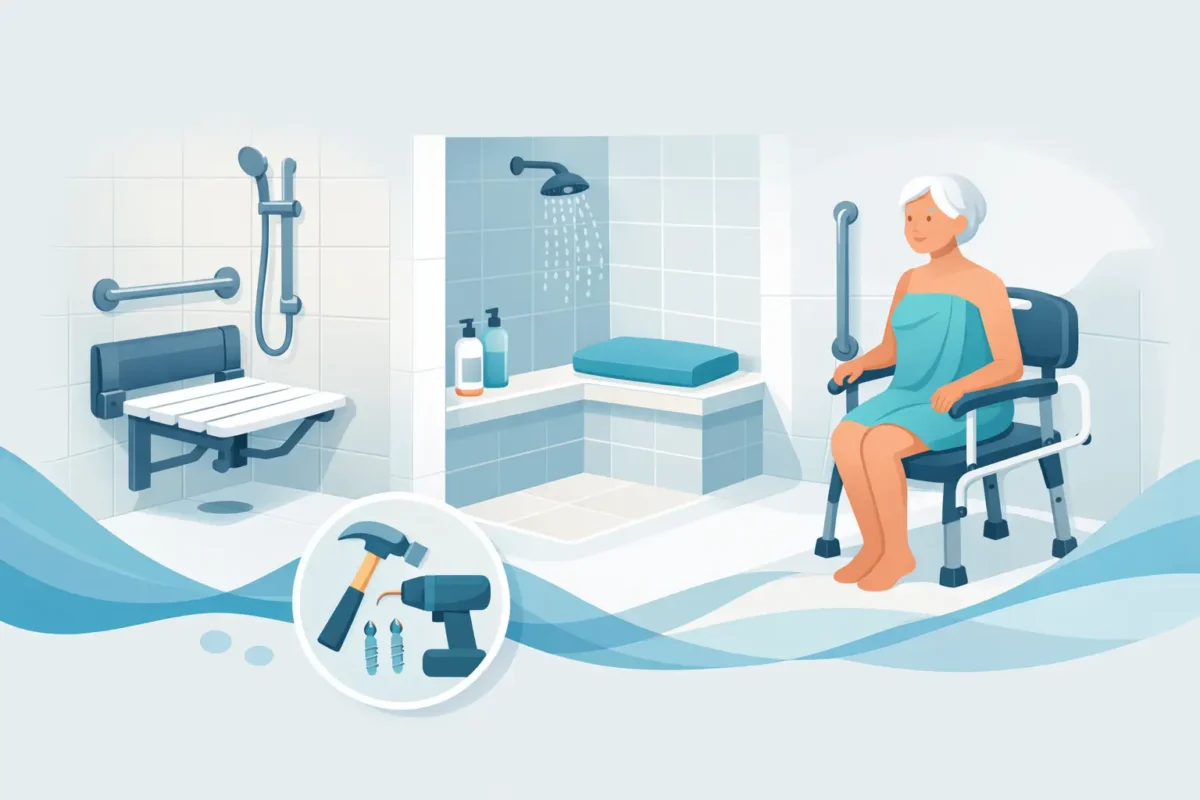
Most shower seats fall into three main categories: wall-mounted folding seats, built-in benches, and portable freestanding chairs or stools. Each can improve comfort and safety, but they are not interchangeable.
Wall-mounted folding shower seats
A folding shower seat attaches directly to the shower wall and folds up when it is not needed. This is often an excellent option for a smaller shower or for a household where only one person needs a seated bathing option. When folded, it keeps the floor area more open for standing users, caregivers, or a mobility device.
The key consideration is support behind the wall. A folding seat must be fastened into proper framing or added structural blocking, not simply attached to tile, drywall, or a shower surround. The seat and its mounting system need to support the intended user safely, including the force created when someone sits down or stands up.
Wall-mounted seats work especially well in custom accessible showers and tub-to-shower conversions. They may be paired with strategically placed grab bars, a handheld showerhead, and a low or barrier-free entry to create a bathing area that is easier to use every day.
Built-in shower benches
A built-in bench is a permanent part of the shower. It may extend across one end of the shower, fit into a corner, or be designed as a compact ledge along a wall. This option is popular for homeowners who want the comfort and solid feel of a full seat while also improving the appearance and usefulness of the shower.
A properly built bench is durable and can be finished with the same tile, solid surface, or wall material used throughout the shower. It gives the user room to sit, place toiletries, shave, or rest while bathing. For a caregiver-assisted bathing routine, a larger bench can provide more room and a steadier transfer surface.
The trade-off is space. A built-in bench takes up part of the shower footprint all the time, so it is usually best for a new custom shower or a shower large enough to remain comfortable after the bench is added. It also requires careful waterproofing and drainage planning. Water should not pool on the seat or at the wall connection, where moisture could eventually cause damage behind the finished surfaces.
Corner benches and compact seats
A corner bench provides many of the benefits of a built-in seat while using less floor area than a full-width bench. It can be a smart choice for homeowners who want a permanent, easy-to-clean place to sit but do not have room for a larger shower seat.
These seats can be designed in a triangular shape, a curved form, or a small rectangular ledge. The right size depends on how the seat will be used. A compact perch may be enough for someone who needs a brief rest, while a person with more significant mobility limitations may need a larger, flatter surface that allows for safer transfers.
Freestanding shower chairs and stools
Portable shower chairs and stools sit on the shower floor and do not require wall installation. They can be useful as a short-term solution after surgery, during recovery, or while a homeowner decides whether a full bathroom remodel is the right next step. Many have adjustable legs, backrests, armrests, or cutout seats for personal hygiene.
Their main advantage is flexibility. They can usually be moved or removed without construction. However, they take up floor space and should be selected carefully for the shower size. A chair that crowds the entry or makes it difficult to turn can create its own obstacle. The legs must sit level on a slip-resistant floor, and the chair should be rated for the user’s weight.
A freestanding chair also does not replace the need for a secure grab bar when additional support is needed. Towel bars, soap dishes, and shower doors are not designed to hold a person’s weight.
Choosing a Seat for the Way You Bathe
Before selecting a seat, consider the actual bathing routine. Does the person need to sit for the entire shower, or only while washing feet and legs? Is balance a concern when turning or stepping over a threshold? Will a spouse, adult child, or caregiver need room to assist? These answers influence the most appropriate seat style and placement.
Seat height matters as well. A seat that is too low can make standing difficult, while one that is too high may leave the user feeling unstable. The goal is a comfortable, supported position with feet able to rest securely on the shower floor. In a customized project, the seat height and depth can be designed around the household’s needs rather than forcing the user to adapt to a standard product.
It is also wise to think ahead. A homeowner may currently need only a place to rest, but a lower shower entry, wider opening, handheld showerhead, and grab bars can make the same bathroom more useful if mobility changes later. Planning these elements together is often more cost-effective and less disruptive than completing separate updates over time.
Installation Details That Affect Safety
A shower seat is only as dependable as the structure and waterproofing behind it. This is why professional evaluation is particularly valuable for a wall-mounted or built-in option.
For a folding seat, installers need to locate or add solid framing where the mounting bracket will sit. In an existing bathroom, that may mean opening the wall, adding blocking, and rebuilding the finished surface. For a custom shower, the blocking can be planned before wall panels or tile are installed.
For a built-in bench, the shower pan and surrounding waterproofing must be designed as one system. The bench needs a slight slope toward the drain so water does not stand on its surface. Seams, corners, and material transitions need proper protection from moisture. A beautiful tile bench is not a successful installation if water can reach the framing underneath.
The shower floor deserves equal attention. Textured, slip-resistant flooring provides more dependable footing when entering, leaving, or moving from standing to seated. A handheld showerhead makes it easier to bathe while seated, and grab bars positioned near the entrance and seat provide secure handholds at the moments when falls are most likely to occur.
When a Shower Seat Is Part of a Larger Remodel
Installing a seat can be a focused update, but it often makes sense to evaluate the entire bathing area. If the existing tub wall is high, the shower opening is narrow, or the floor has an awkward step, adding a seat alone may not solve the main safety issue.
A tub-to-shower conversion can replace a difficult-to-enter tub with a lower-entry shower that better accommodates a fixed bench or folding seat. For homeowners who prefer soaking but need safer access, an inward-swing door tub or walk-in tub may be a better fit. The right solution depends on whether the household values a seated shower, therapeutic soaking, caregiver access, or a combination of these needs.
Camden Enterprises helps homeowners evaluate these choices in the context of the bathroom they have, not just the product they are considering. That personal approach can help families avoid spending money on a feature that does not fully address day-to-day safety or comfort.
Budget, Timing, and Long-Term Value
Portable chairs generally have the lowest upfront cost, while wall-mounted seats and built-in benches involve more labor and materials. The cost of a permanent option varies based on the shower’s current condition, whether structural changes are needed, the selected finishes, and whether the work is part of a larger renovation.
A folding seat may be a practical middle ground when space is limited and the shower walls can be properly reinforced. A built-in bench is often the better long-term investment in a custom shower, particularly when homeowners want a durable feature that looks intentional and adds everyday convenience for everyone in the household.
Qualified buyers may also find that financing helps make a more complete accessibility project manageable. Rather than choosing a temporary fix because of immediate budget pressure, families can consider the improvements needed for safer bathing over the years ahead.
A well-chosen shower seat should feel like a natural part of the bathroom, offering a steady place to rest and a little more confidence every time the water turns on.