
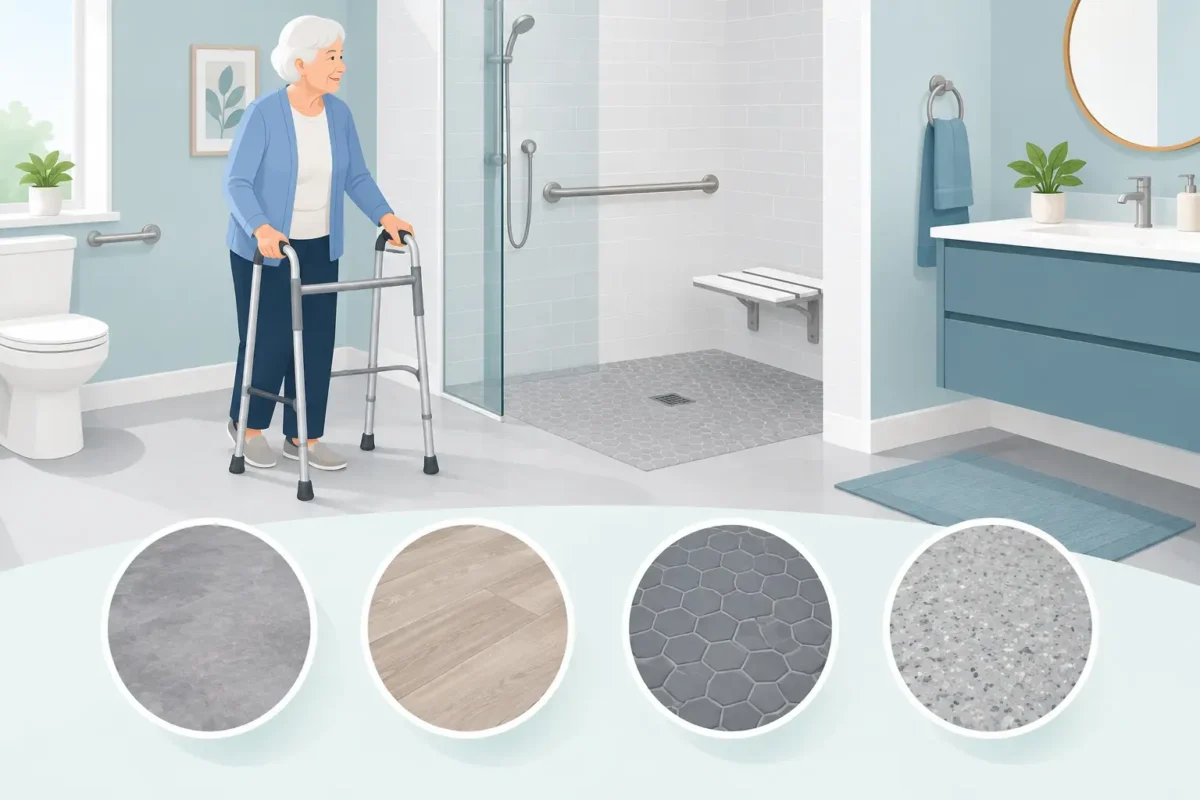
A bathroom floor can make an ordinary routine feel secure or create a daily worry. The right senior bathroom flooring options help reduce slip concerns, accommodate mobility aids, and make a bathroom easier to maintain without giving up the look of a finished, comfortable home.
For many homeowners, the decision becomes more urgent after a fall, a change in balance, a new walker, or the realization that stepping out of a tub is no longer as easy as it once was. Flooring is not a small finishing detail in that situation. It is part of how the entire bathroom supports safer, more independent living.
What Makes Bathroom Flooring Safer for Seniors?
A safer bathroom floor is not simply the roughest surface available. It needs to provide dependable traction when wet while remaining comfortable to walk on, simple to clean, and appropriate for the rest of the bathroom design. A surface that catches the foot too aggressively can be difficult for someone using a walker to move across. Deep texture can also hold dirt and make cleaning harder.
Look for a floor with a low-slip or slip-resistant finish, especially near a shower, tub, toilet, and vanity. Smaller-format tile can also improve grip because the grout lines create more points of contact underfoot. However, more grout also means more cleaning and maintenance, so this is a practical trade-off to discuss before selecting a material.
The floor should be level, with no raised edges between the bathroom and hallway. Even a low transition can catch a toe, walker leg, or wheelchair wheel. In a shower conversion, proper floor slope toward the drain is equally important. Water should move where it belongs without creating a steep surface that feels unsteady.
The Best Senior Bathroom Flooring Options
Textured porcelain tile
Porcelain tile is a strong choice for homeowners who want long-term durability and a wide range of colors and styles. It resists water well, handles heavy use, and can resemble natural stone, wood, or concrete without the upkeep those materials may require. For a senior-friendly bathroom, choose a matte or textured porcelain tile rather than a polished finish.
Small mosaic porcelain tiles are often used on shower floors because their many grout lines can add traction. Larger tiles may work well on the main bathroom floor, provided they have an appropriate slip-resistant finish. The main drawback is that tile can feel cold and hard underfoot. A radiant floor heating system can add comfort, while supportive bath mats placed outside the shower may help, as long as they are securely backed and do not curl at the edges.
Luxury vinyl tile or luxury vinyl plank
Luxury vinyl is one of the most practical flooring choices for an accessible bathroom. It is warmer and softer underfoot than tile, water-resistant, easy to clean, and available in designs that resemble wood or stone. For older homeowners who are concerned about the hard feel of tile, this added comfort can make a meaningful difference.
Choose a product rated for bathroom moisture and select a textured, low-gloss finish. Luxury vinyl is especially useful in a bathroom where a walk-in shower, comfort-height toilet, or wider doorways are being added as part of a broader remodel. It can create a clean, continuous appearance from the doorway through the main bathroom area.
Not every vinyl product is appropriate for every shower application. Standard luxury vinyl should generally not be used inside a tiled shower floor or in areas where standing water may reach seams. A qualified installer can help determine where it will perform well and where a different material is the safer choice.
Sheet vinyl flooring
Sheet vinyl remains a smart option for homeowners who want a budget-conscious, easy-care bathroom floor. Because it is installed in large sheets with few seams, it offers strong protection against water reaching the subfloor. It is also comfortable underfoot and available in modern patterns that look far more refined than many people expect.
For someone aging in place, sheet vinyl has another advantage: it can provide a smooth surface for walkers and rolling mobility equipment. Look for a non-slip finish and avoid highly glossy patterns that may visually disguise water on the floor. Professional installation matters, particularly around toilets, vanities, and shower entries where moisture protection is essential.
Natural stone-look tile and real stone
Stone-look porcelain gives homeowners the appearance of slate, travertine, or marble with less maintenance and more predictable moisture resistance. It is often the better choice when safety and ease of care are priorities.
Real natural stone can be beautiful, but it requires more attention. Some stone surfaces need sealing, can stain, and may become slippery when polished. Honed or textured stone offers better traction than polished marble, but homeowners should understand the maintenance commitment before choosing it. In a bathroom designed around independence, a material that is easier to clean and maintain is often the more comfortable long-term decision.
Rubber flooring
Rubber flooring is less common in residential bathrooms, but it deserves consideration in certain accessibility-focused designs. It offers excellent traction, a softer walking surface, and greater cushioning in the event of a fall. It can be especially helpful for households where balance is a significant concern.
Its appearance is more functional than traditional tile or wood-look flooring, although available styles have improved. Rubber can also have a distinct odor when first installed and may require particular cleaning products. It is a specialized choice, but it can be a very sensible one when safety takes priority over a conventional bathroom look.
Flooring Choices to Approach Carefully
Polished tile, glossy marble, and smooth sealed concrete can become slippery when wet. They may suit a powder room with little moisture exposure, but they are usually not the first choice for a full bathroom used by someone with limited balance or mobility.
Traditional hardwood is another material to consider carefully. It brings warmth and character, but repeated water exposure can cause damage over time. Engineered wood may offer better stability, yet it still needs prompt cleanup after splashes or leaks. In most accessible bathroom remodels, a water-resistant vinyl or porcelain alternative delivers a similar look with fewer concerns.
Loose rugs can create problems even when the flooring beneath them is safe. If a bath mat is needed for comfort or water control, choose one with a secure non-slip backing, keep it flat, and replace it when the backing begins to lose its grip.
Senior Bathroom Flooring Options Work Best as Part of a Plan
Flooring alone cannot solve every bathroom safety concern. It should work with the layout, lighting, fixtures, and bathing area. A slip-resistant floor is more effective when paired with well-placed grab bars, a walk-in or low-threshold shower, a handheld showerhead, adequate lighting, and room to move comfortably.
For example, a tub-to-shower conversion may call for small textured tile on the shower floor and durable luxury vinyl or porcelain in the main bathroom. A wheelchair-accessible design may require a nearly flush shower entry, carefully planned drainage, and flooring that transitions smoothly into adjacent spaces. The best combination depends on who uses the bathroom now and what needs may change over the coming years.
Before choosing a color or pattern, measure how the room is used. Is there a caregiver who needs additional standing room? Does a walker need to turn near the vanity? Is the bathroom prone to splashing near the tub? These practical questions often point toward the right material more clearly than a showroom sample alone.
Installation Details Matter as Much as Material
Even an excellent flooring product can perform poorly if it is installed over an uneven or damaged subfloor. Moisture damage beneath an old toilet or tub should be corrected before new flooring goes down. The installer should also plan for secure edges, proper waterproofing, and transitions that do not create trip hazards.
In shower areas, drainage and slope deserve particular attention. A shower floor that holds water can become slippery and frustrating to clean. A properly built shower directs water to the drain while keeping the surface comfortable and stable underfoot.
Camden Enterprises helps homeowners across Maryland’s Eastern Shore plan accessible bathroom renovations around the details that affect everyday comfort, from walk-in shower design to flooring selections that fit the space and the household’s needs. For qualified buyers, financing options can also make it easier to move forward with a larger safety-focused remodel rather than postponing needed improvements.
A safer bathroom should still feel like your bathroom: welcoming, easy to care for, and built for the routines that help you remain comfortable at home. Start with the footing beneath you, then choose a design that supports the way you want to live.