
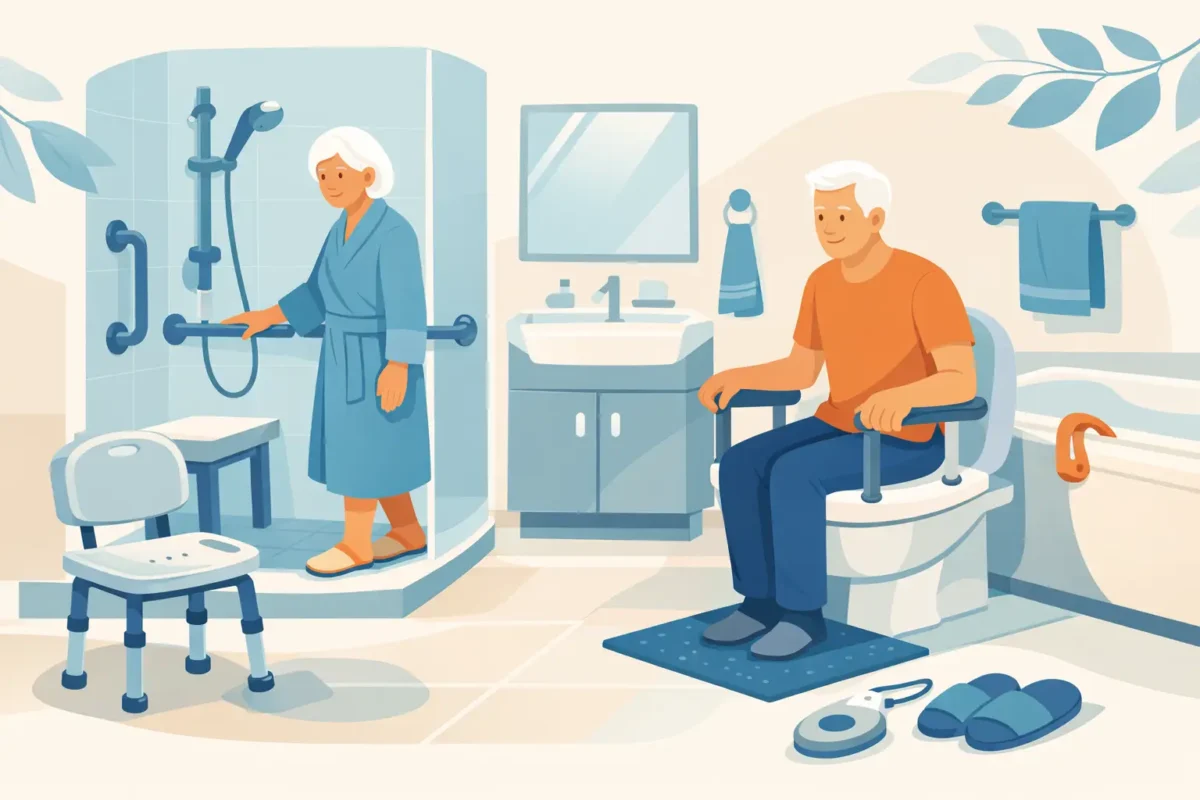
A bathroom that once felt routine can become the most challenging room in the house when balance, strength, vision, or mobility changes. A high tub wall, a slick floor, or a door that is difficult to manage can turn a simple shower into a daily source of worry. Thoughtful bathroom safety modifications seniors can use help reduce that worry while protecting the comfort and independence that make staying at home possible.
The right improvements are not always the biggest or most expensive ones. For some homeowners, a few well-placed safety features may make an immediate difference. For others, replacing an unsafe tub with an accessible shower or walk-in tub is the better long-term answer. The best choice depends on the person using the space, the layout of the home, and how their needs may change over time.
Start With the Risk You Can See Every Day
Falls in the bathroom often happen during transitions: stepping over a tub wall, standing up from the toilet, turning on a wet floor, or reaching for a towel. Before choosing fixtures or finishes, look closely at the routine itself. Where does someone hesitate, hold onto an unstable towel bar, or need help from a family member? Those moments point to the changes that matter most.
A useful evaluation considers the full path through the room. Can the bathroom door open easily? Is there enough space to turn around with a walker? Is the light bright enough before dawn or at night? Can a person get in and out of the bathing area without lifting a leg over a high edge? A bathroom may look updated but still be unsafe if these basic movements are difficult.
Families should also consider future needs, not only today’s limitations. A bathroom remodel is an opportunity to avoid repeating the work a few years later. Choosing adaptable features now can make the home more comfortable for aging in place and more practical for visiting relatives of all ages.
Safer Bathing Begins With Easier Entry
The traditional bathtub is often the biggest barrier in an older bathroom. Even a careful person can lose balance while stepping over its side, especially when the floor is wet. That is why a tub-to-shower conversion is often one of the most meaningful bathroom safety modifications for seniors who want a simpler daily routine.
Low-threshold and curbless showers
A low-threshold shower reduces the step required to enter, while a curbless shower creates a nearly level transition from the bathroom floor into the shower. Either option can improve access for people with limited mobility, and a curbless design may better accommodate a walker or wheelchair when the bathroom layout allows it.
The best choice depends on the existing floor structure, drainage requirements, and the homeowner’s mobility. A low threshold may be a practical fit in many remodels, while a fully curbless installation may require more extensive construction. A qualified contractor can explain what is realistic for the home and design a shower that manages water properly without creating another hazard.
Walk-in tubs for seated bathing
For homeowners who prefer soaking to showering, a walk-in tub can provide a secure alternative to a standard tub. An inward-swing door allows the bather to step through a low entry rather than climb over a tall wall. Built-in seating means the person can bathe while seated, which can be especially helpful for those who cannot stand comfortably for a full shower.
Walk-in tubs are not the right answer for every household. The door must remain closed until the tub drains, so users should be comfortable waiting inside after bathing. For people who need a quick shower or who have a caregiver assisting them, an accessible shower may be more convenient. The important thing is matching the product to the routine, rather than choosing based on appearance alone.
Seats, handheld showerheads, and easy controls
A securely installed shower seat gives a person a place to rest while washing. It can be a built-in bench or a properly selected fold-down seat, depending on available space and who will use the shower. Pairing it with a handheld showerhead makes bathing easier while seated and gives caregivers more flexibility when assistance is needed.
Controls should be easy to reach from both inside and outside the shower. Lever handles are generally easier to operate than small round knobs, particularly for someone with arthritis or reduced hand strength. Anti-scald controls are another worthwhile feature because they help prevent sudden temperature changes from causing burns.
Grab Bars Need the Right Placement
Grab bars are among the most effective safety additions, but only when they are professionally anchored and positioned for real use. Towel bars and suction-mounted accessories are not designed to support body weight. A grab bar should be secured to appropriate framing or installed with a reliable mounting system designed for the wall construction.
Placement matters as much as installation. A bar near the shower entry can help with stepping in and out. Bars along the shower wall provide support while turning or sitting. A properly located bar beside the toilet can make sitting down and standing up less strenuous. The exact locations should reflect the homeowner’s height, reach, dominant hand, and movement patterns.
Some homeowners worry that grab bars will make the room look institutional. Today’s options include finishes and styles that coordinate with faucets, shower trim, and cabinetry. Safety features can be part of a bathroom that still feels warm, attractive, and personal.
Make Wet Surfaces and Lighting Work Harder
A beautiful bathroom floor is not automatically a safe one. Polished materials can become slippery when wet, and small bathroom rugs can bunch up or slide. Slip-resistant flooring, a textured shower base, and secure bath mats help create more dependable footing where it is needed most.
Good lighting also prevents missteps. A single overhead fixture can leave shadows around the tub, toilet, and vanity. Bright, even lighting at the vanity and bathing area makes it easier to see wet spots, changes in floor level, and the edges of fixtures. Night lights or motion-activated lighting can be especially helpful for late-night trips to the bathroom.
Color contrast can quietly improve safety as well. A light-colored grab bar against a darker wall, or a shower floor that contrasts with its threshold, can be easier to see for someone with reduced vision. These choices do not need to dominate the design. They simply make important features easier to identify quickly.
Improve Toilet Access and Room to Move
Toilet height is often overlooked until standing becomes difficult. A comfort-height toilet sits slightly higher than many traditional models, reducing the distance a person must lower and raise themselves. In some bathrooms, a raised seat or support rails may help, but a properly selected toilet can create a cleaner, more lasting solution during a remodel.
Clear floor space is equally valuable. Narrow paths between the vanity, toilet, and shower can make a bathroom hard to navigate with a cane, walker, or wheelchair. Reconfiguring the layout, selecting a more compact vanity, or changing the direction of a door swing can create meaningful room without necessarily expanding the bathroom.
Pocket doors and outswing doors can be useful in tight spaces because they avoid blocking the interior when opened. However, each home has different wall conditions and privacy needs. The goal is a door that is easy to operate and does not trap someone inside if they fall behind it.
Choose Improvements That Support Life at Home
Bathroom safety is not about making a home feel medical. It is about removing unnecessary obstacles from everyday life. The most successful remodels combine safe access, comfortable fixtures, easy cleaning, and a design that feels like it belongs in the home.
For families on Maryland’s Eastern Shore, working with an experienced accessibility-focused remodeling team can make the process less overwhelming. Camden Enterprises helps homeowners consider the practical details, from accessible shower design and walk-in tubs to custom features that fit the room and the person using it. Financing options for qualified buyers can also make a major safety upgrade more manageable.
A safer bathroom can mean more than fewer fall risks. It can offer the reassurance of a private, comfortable routine and the confidence to keep enjoying home on your own terms.