
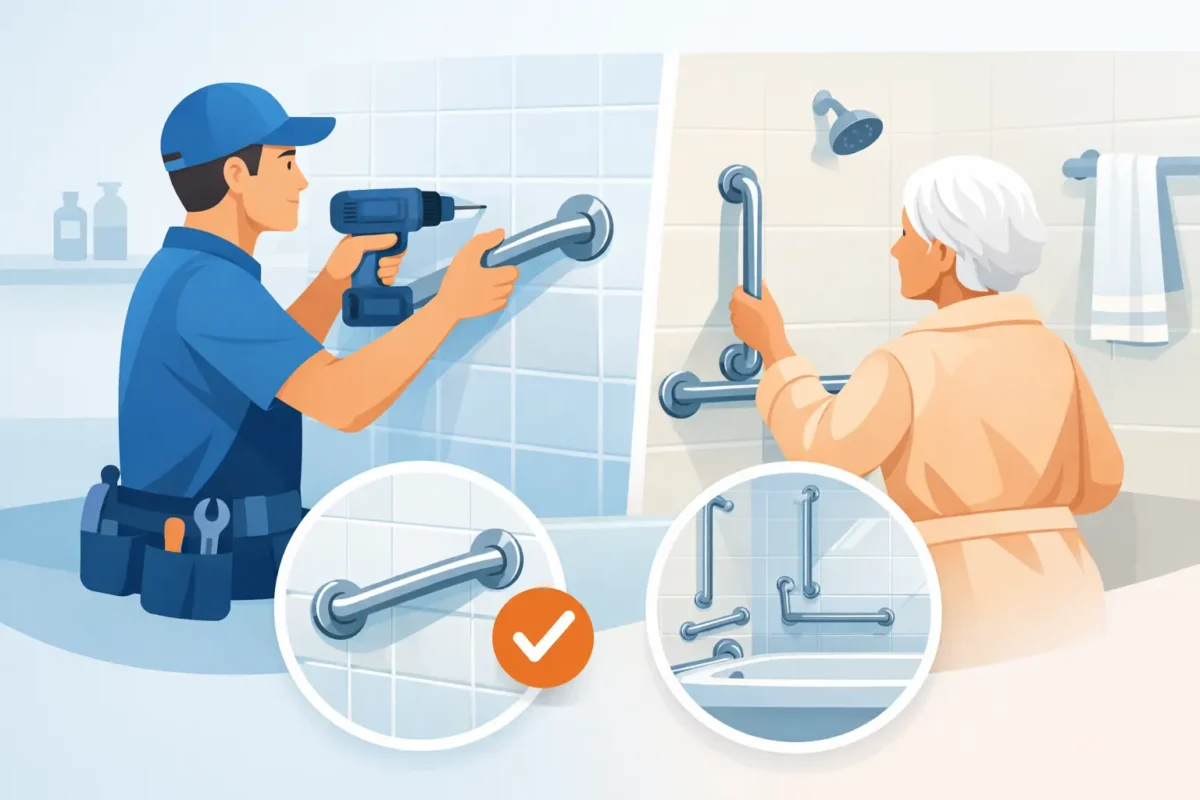
A slippery bathroom floor and a high tub wall can turn an ordinary morning routine into a source of worry. Thoughtful grab bar installation gives homeowners a dependable place to steady themselves when stepping into the shower, standing from the toilet, or moving across a wet bathroom. For many Eastern Shore families, this is not a small convenience. It is a practical way to support safe, independent living at home.
Grab bars are most effective when they are planned around the person using the bathroom and installed into solid framing. The right location, height, angle, and mounting method matter just as much as the bar itself. A well-finished installation can also blend naturally with a bathroom remodel, giving the room a safer layout without making it feel clinical.
When a Bathroom Needs Grab Bar Installation
Many homeowners wait for a fall or close call before considering bathroom safety upgrades. It is often better to make changes while daily routines are still manageable. A grab bar can provide welcome support for someone recovering from surgery, living with arthritis, dealing with balance changes, or simply finding it harder to step over the side of a traditional bathtub.
They are also helpful in multigenerational homes. A bathroom used by an older parent, an adult child with a mobility limitation, and visiting family members may need more support than a standard bathroom design provides. Installing bars early can make the room more comfortable for everyone while helping avoid an urgent remodel later.
The most common areas are beside the toilet, at the shower entrance, and along the tub wall. However, the best placement depends on how a person enters, exits, turns, sits, and stands in that specific room. A bar that looks properly placed but is out of reach at the moment it is needed will not provide the intended protection.
Where Grab Bars Make the Biggest Difference
At the tub or shower entry
Stepping over a tub wall requires balance at precisely the point where water and smooth surfaces create the greatest risk. A properly located vertical or angled grab bar near the entry can give a homeowner a stable handhold as they step in and out. Inside the bathing area, a horizontal bar can offer support while standing, turning, or using a shower seat.
For a homeowner who has begun avoiding a tub because the entry feels unsafe, grab bars may be part of the answer. In other cases, the safer long-term solution is a tub-to-shower conversion, a low-threshold accessible shower, or a walk-in tub. The right choice depends on current mobility, available space, and whether the homeowner needs help with stepping in, standing for a shower, or sitting down to bathe.
Beside the toilet
Sitting and standing can become difficult even when walking around the home feels comfortable. A grab bar beside the toilet provides leverage and stability without requiring a family member to assist. The bar may be horizontal, vertical, or angled based on the wall layout and the user’s movement.
This upgrade is especially useful when paired with a comfort-height toilet, which reduces the distance a person has to lower and raise themselves. Together, these changes can make a familiar bathroom much easier to use every day.
Near a shower seat or bathing bench
A built-in or folding shower seat can reduce fatigue and make bathing more manageable, but the user still needs stable support for sitting and rising. Grab bars should be positioned so they are reachable from the seat and useful while transferring into position. This is one reason accessibility features should be designed as a system rather than added one piece at a time.
Why Professional Installation Matters
A grab bar is only as reliable as the wall behind it. Bathroom walls may contain wood studs, metal studs, plumbing lines, electrical wiring, insulation, or tile over various backing materials. Mounting a bar into drywall alone, or relying on a standard towel bar, can create a dangerous false sense of security.
Professional installation starts with locating appropriate structural support and selecting hardware suited to the wall construction. In some situations, additional blocking or reinforcement may be needed behind the finished wall. This is easier to address during a bathroom remodel, but it can also be handled carefully in an existing bathroom when the conditions allow.
Tile and shower surrounds require particular care. Drilling in the wrong location can crack tile, damage waterproofing, or strike a pipe. An experienced installer evaluates the surface and wall structure before fastening anything. The goal is a secure bar that can handle real body weight while preserving the appearance and integrity of the bathroom.
Suction-mounted grab bars may be useful as temporary travel aids or for limited balance support, but they should not be treated as a replacement for securely mounted bars. They can lose adhesion without warning, especially in humid bathing areas. For primary support during transfers, permanent installation is the safer choice.
Choosing the Right Style and Finish
Safety features do not have to look out of place. Grab bars are available in finishes that coordinate with common bathroom fixtures, including chrome, brushed nickel, bronze, and matte black. Some designs resemble traditional towel bars while providing the strength needed for support. Others include a shelf, toilet paper holder, or fold-down seat support where space is limited.
The finish should fit the bathroom, but function comes first. A bar needs a comfortable grip and enough clearance between the bar and wall for a secure handhold. Smooth decorative styles can look appealing, yet a slightly textured surface may be easier to hold with wet hands. If arthritis or reduced hand strength is a concern, choosing an easy-to-grasp profile is especially worthwhile.
Bar length also varies. A longer horizontal bar can provide support through more of the bathing or transfer movement, while a shorter vertical bar may be useful where wall space is limited. There is no single size or position that works for every household. The best layout is based on the user’s reach, height, strength, and routine.
Plan Grab Bar Installation With Future Needs in Mind
Bathroom safety improvements work best when they consider not only what is difficult today, but what may become difficult over time. Someone may only need a bar at the tub entrance now, yet future needs could include a shower seat, a handheld showerhead, wider access, or a no-threshold shower. Planning ahead can prevent repeated disruption and unnecessary expense.
During a larger bathroom renovation, it is smart to add wall blocking in likely support locations even if every bar is not installed immediately. This gives homeowners more flexibility later and avoids opening finished walls when needs change. It is a small planning decision that can make a meaningful difference in the years ahead.
A full accessibility renovation is not necessary for every bathroom. Sometimes a few well-placed bars, improved lighting, non-slip flooring, and a handheld showerhead make the room much safer. In other situations, a high-sided tub or narrow shower is the main obstacle, and a more complete renovation will offer better comfort and confidence. An honest assessment should focus on the home and the person, not on a one-size-fits-all solution.
A Safer Bathroom Should Still Feel Like Home
Accessibility improvements are about preserving daily routines, privacy, and confidence. They should not make a homeowner feel as though their bathroom has become an institution. With the right design and professional workmanship, grab bars can be integrated into a bathroom that is attractive, comfortable, and built for real life.
Camden Enterprises helps homeowners throughout Maryland’s Eastern Shore evaluate practical bathroom safety upgrades, from secure grab bars to accessible showers and walk-in tubs. A personalized consultation can identify which changes will make the greatest difference without asking the homeowner to take on more renovation than they need.
The best time to create a safer bathroom is before a routine task becomes a risky one. A securely installed grab bar can be a simple addition, but for the person relying on it, it can make each day at home feel steadier and more independent.