
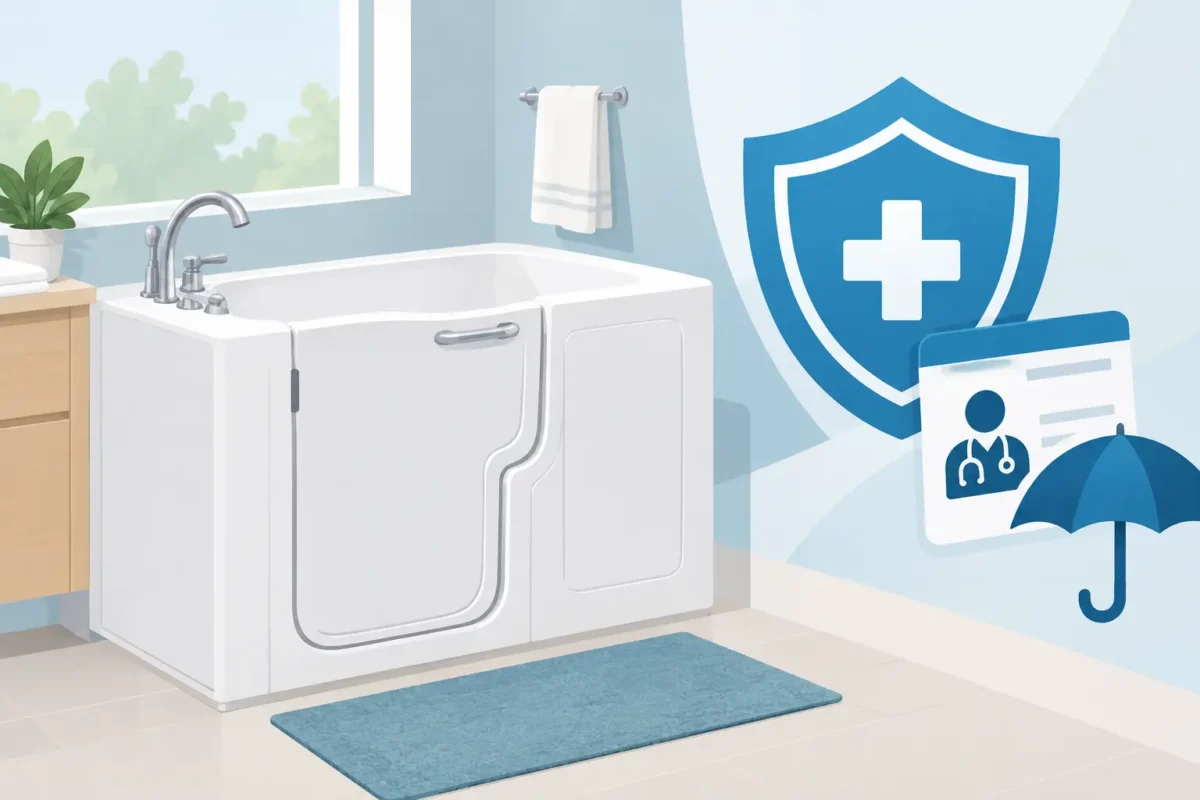
A bathtub that once felt routine can become one of the riskiest places in the house. Stepping over a high tub wall, balancing on a wet surface, or getting down into a standard tub can put independence at risk. Homeowners often ask, are walk-in tubs covered by insurance or Medicare when these daily challenges begin. The answer is usually not a simple yes or no, but there may be programs and payment options worth exploring.
A walk-in tub is generally considered a home modification rather than standard medical equipment. That distinction affects coverage. Still, a documented medical need, the type of insurance involved, and the features being installed can all make a difference.
Are Walk-In Tubs Covered by Medicare?
Original Medicare typically does not pay for a walk-in tub. Medicare Part B covers durable medical equipment when it is medically necessary and prescribed by a qualified provider. Examples may include walkers, wheelchairs, hospital beds, and certain bathroom safety equipment. A complete walk-in tub, however, is normally viewed as a convenience or home-improvement item rather than durable medical equipment.
That does not mean every bathroom-related expense is automatically excluded. In some situations, a physician may recommend equipment such as grab bars, a shower chair, or other safety aids. Those individual items may have different coverage rules than a full tub replacement. The installation work, plumbing changes, electrical updates, wall repairs, and flooring needed for a walk-in tub are usually not covered by Original Medicare.
Medicare Advantage plans are different. These private plans must provide at least the same core coverage as Original Medicare, but some offer additional benefits for home safety, over-the-counter health items, or support services. A plan may provide an allowance or benefit that can help with certain accessibility improvements. Benefits vary widely by insurer, plan, county, and year, so homeowners should call their plan directly before making decisions based on assumed coverage.
When speaking with a plan representative, ask whether it covers bathroom safety modifications, home accessibility benefits, or medically necessary home adaptations. Ask what documentation is required and whether approval must be obtained before work begins. Get the answer in writing whenever possible.
Will Private Health Insurance Pay for a Walk-In Tub?
Most standard private health insurance policies do not cover the purchase and installation of a walk-in tub. Like Original Medicare, many insurers classify the tub as a residential renovation rather than a covered medical item.
There can be exceptions, especially when a policy includes a home-care benefit, a rehabilitation benefit, or specialized coverage for long-term care. An insurer may be more likely to consider a request when there is clear evidence that the modification addresses a serious mobility or safety concern. Even then, partial coverage is more common than full payment.
A letter of medical necessity can strengthen a request. This letter should come from a physician, occupational therapist, or another qualified medical professional who understands the homeowner’s condition and daily bathing challenges. It may explain why a standard tub is unsafe and why a lower-entry bathing solution could help the individual remain at home.
Documentation is helpful, but it does not guarantee approval. Before signing a contract or beginning demolition, homeowners should confirm the insurer’s requirements, coverage limits, claim process, and whether a specific product or contractor must be approved in advance.
Medicaid, Veterans Benefits, and Local Assistance
For eligible households, Medicaid may be a more promising source of support than Medicare. Maryland Medicaid programs and waiver services may help certain individuals who need home modifications to remain safely in their homes. Eligibility often depends on income, medical needs, age, disability status, and enrollment in a specific program.
Coverage can change, and available services may differ from one county or program to another. A case manager, local aging office, or Medicaid representative can explain current options and whether a bathroom modification is eligible.
Veterans with service-connected disabilities or significant mobility limitations may also have access to assistance through the Department of Veterans Affairs. Depending on eligibility, VA home-modification grants may help pay for accessibility improvements. These programs have specific application processes, benefit limits, and qualifying conditions, so it is wise to contact the VA before selecting products or starting construction.
Some local nonprofit groups, aging agencies, and community assistance programs offer limited home-repair support as well. Funding is often based on need and may have waiting lists. Even if a program will not pay for a complete walk-in tub, it may help with related safety improvements such as grab bars, non-slip flooring, or an accessible shower conversion.
What Costs Are Homeowners Usually Responsible For?
When insurance or public assistance does not apply, the homeowner usually pays for the tub and the remodeling work. The total investment depends on the tub model, bathroom layout, plumbing condition, electrical needs, wall finishes, flooring, and the amount of customization required.
A walk-in tub installation is more than placing a new fixture in the room. The project may involve removing an existing tub, modifying water lines and drains, upgrading electrical service, reinforcing the floor if needed, repairing walls, and creating a safe, finished bathing area around the new tub. A careful estimate should account for the complete installation, not only the price of the tub itself.
Features also affect cost. Air jets, hydrotherapy jets, heated seating, fast-fill faucets, quick-drain systems, outward- or inward-swing doors, and specialized sizing can all change the final price. The best choice is not always the model with the most features. It is the one that fits the homeowner’s mobility, bathing routine, caregiver needs, and bathroom space.
For some households, an accessible shower may be a better fit than a walk-in tub. A low-threshold or curbless shower can make entry easier for someone who uses a walker or needs caregiver assistance. A seated shower with secure grab bars may also provide a more practical solution for a person who does not want to wait for a tub to fill and drain. A bathroom consultation should consider both options honestly.
Ways to Make an Accessible Bathroom More Affordable
Coverage is only one part of the planning conversation. Homeowners can also ask whether a Health Savings Account or Flexible Spending Account can be used for medically necessary accessibility expenses. Rules vary, and supporting medical documentation may be required, so confirm eligibility with the account administrator or tax professional before relying on those funds.
It may also be possible to treat part of a medically necessary home modification as a medical expense for tax purposes. This is a tax question, not a guaranteed deduction, and personal circumstances matter. Keep detailed estimates, invoices, receipts, and medical documentation, then speak with a qualified tax professional.
Financing can help families move forward without delaying an important safety improvement. Camden Enterprises offers financing options, including 100% financing and 0% interest for 18 months for qualified buyers. Reviewing the payment terms, total project cost, and monthly budget upfront can help homeowners choose an option that supports both safety and financial comfort.
Questions to Ask Before You Commit
Before choosing a walk-in tub or beginning an insurance request, start with the practical details. Can the homeowner safely step into the tub and close the door independently? How long will it take to fill and drain? Is there enough room for a caregiver to assist if needed? Will the bathroom floor remain safe when the door is opened after bathing?
Then ask the contractor for a complete, written scope of work. It should explain what is included in the installation, what bathroom repairs or upgrades may be needed, how long the project is expected to take, and who will handle each part of the work. Certified installation and sound remodeling practices matter because an accessibility upgrade must be dependable every day, not simply look good on installation day.
It also helps to request information you can share with an insurer, benefits administrator, or medical provider. A clear product description, itemized estimate, and explanation of the safety purpose can make the review process easier.
A safer bathroom can reduce worry for the person bathing and for the family members who care about them. Whether a walk-in tub is covered fully, partially, or not at all, the right plan begins with an honest look at mobility needs, available benefits, and a solution built to support comfortable living at home for years to come.