
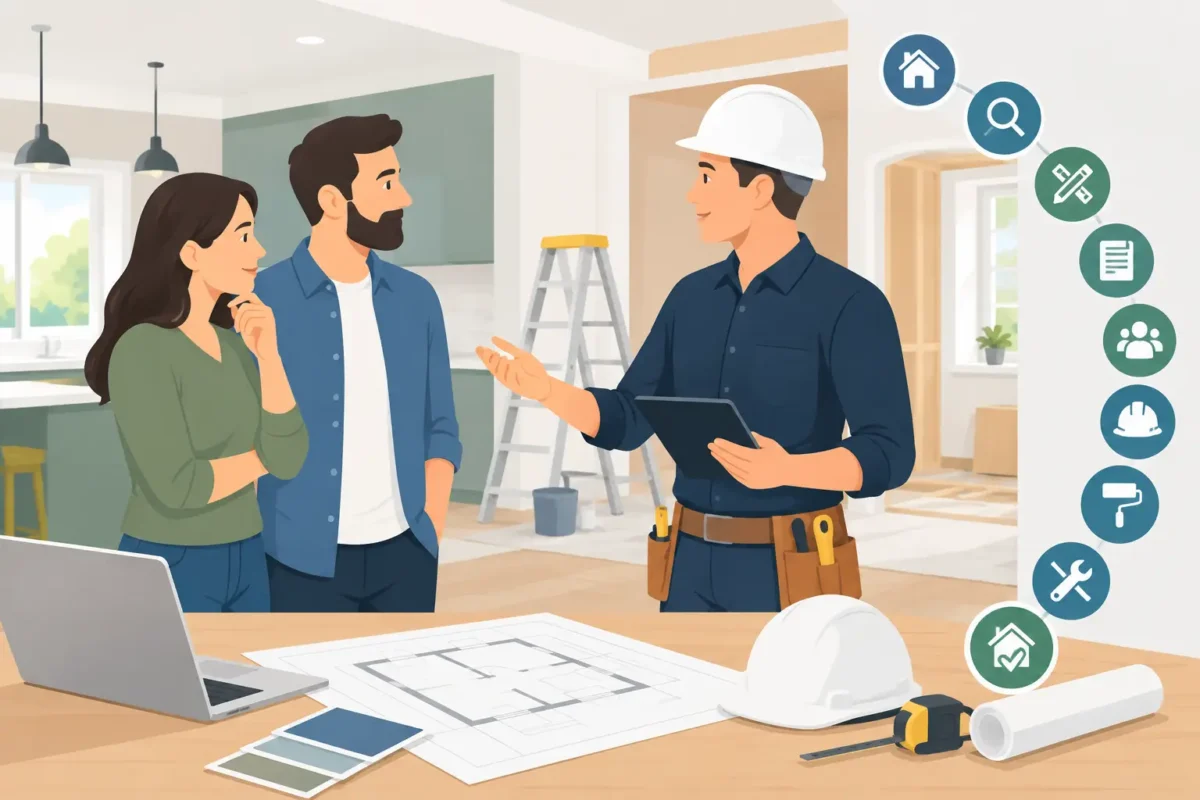
A bathroom that feels unsafe can change a household’s entire routine. Maybe a high tub wall has become difficult to step over, the shower is too narrow for safe movement, or an outdated layout no longer works for a parent moving in. In moments like these, choosing a home renovation contractor is not simply about finding the lowest estimate. It is about trusting someone with your home’s safety, comfort, budget, and daily life.
The right contractor should make the process clearer, not more confusing. They should listen to the problem you are trying to solve, explain realistic options, and stand behind the work after installation is complete. Use these steps to make a confident decision before your project begins.
1. Start With the Problem You Need Solved
Before requesting estimates, define what is not working in your home. A homeowner planning a cosmetic bathroom update may prioritize tile, storage, and a fresh layout. A homeowner concerned about balance, mobility, or bathing safety may need a low-threshold shower, grab bars placed in the right locations, a built-in seat, or a walk-in tub.
That distinction matters. Not every remodeling contractor has experience designing for accessibility, and an attractive bathroom is not automatically a safer bathroom. Be specific about who will use the space now and in the years ahead. If family members have different needs, such as a spouse with limited mobility and grandchildren who visit often, mention that early. Good planning begins with an honest conversation about daily routines.
2. Look for Experience That Matches Your Project
A contractor can be skilled at general repairs yet not be the right fit for a major bathroom renovation or custom shower installation. Ask about projects that are similar in scope to yours. For accessibility work, that includes walk-in tubs, inward-swing door tubs, tub-to-shower conversions, barrier-free showers, shower seating, and practical fixture placement.
Relevant experience helps a contractor anticipate details that are easy to miss. For example, a tub-to-shower conversion may require plumbing changes, wall repairs, waterproofing, flooring adjustments, and a plan for safely entering and leaving the shower. A contractor who handles this work regularly can explain those needs before work starts instead of treating them as surprises halfway through the project.
Experience should also include product knowledge. Specialized bathing products need proper installation to perform as intended. Ask whether the company has certified sales or installation expertise for the products it recommends.
3. Verify Licensing, Insurance, and Local Accountability
A professional contractor should be prepared to discuss licensing and insurance without hesitation. These protections matter when workers are in your home and when a project involves plumbing, electrical work, structural changes, or water-sensitive areas such as bathrooms and kitchens.
Ask for the contractor’s license information and proof of appropriate insurance. You can also ask how long the company has served your area and whether it has an established local presence. A contractor with roots in the community has a reason to protect its reputation and remain available if you need help after the project is finished.
For homeowners on Maryland’s Eastern Shore and in nearby Maryland and Virginia communities, local familiarity can be especially useful. Contractors who regularly work in the region understand the homes, the travel considerations, and the value homeowners place on dependable scheduling and personal service.
4. Compare Scope, Not Just the Bottom-Line Price
One estimate may look much lower than another because it leaves out work that the higher estimate includes. Comparing only the final number can lead to disappointment later.
Ask each contractor to explain the full scope of work in plain language. The proposal should make clear what materials are included, who handles demolition and cleanup, whether plumbing or electrical changes are expected, how walls and floors will be protected, and what happens if hidden damage is uncovered. In a bathroom, water damage, mold concerns, uneven floors, and outdated plumbing can affect both cost and schedule.
A detailed estimate does not mean every possibility can be predicted. Older homes often reveal conditions once the existing tub, flooring, or walls are removed. What matters is that the contractor explains how change orders are handled and gets your approval before adding work or cost.
5. Ask How the Design Supports Safety and Comfort
When accessibility is part of the project, the smallest choices can make a meaningful difference. The height of a shower threshold, the location of controls, the width of an entry, the texture of flooring, and the placement of grab bars all affect how safely someone can use the room.
Do not assume standard features are right for your household. A handheld showerhead may be helpful for someone who needs to sit while bathing. A built-in seat can improve comfort, but it needs to be positioned thoughtfully. Grab bars should be installed where they provide support, not added as an afterthought in a convenient open spot.
A compassionate contractor will ask questions rather than make assumptions. They should consider the person’s current abilities while also helping you plan for changing needs. The goal is not to make a bathroom look medical. It is to create a space that feels comfortable, dignified, and easy to use.
6. Pay Attention to Communication Before You Sign
The consultation tells you a great deal about the experience you may have during construction. Is the contractor listening carefully? Do they answer questions directly? Are they willing to explain unfamiliar terms? Do they return calls and messages in a reasonable time?
Home renovations involve decisions, schedules, and occasional unexpected conditions. You deserve a contractor who communicates clearly when plans need to change. Be cautious if someone pressures you to sign immediately, avoids questions about timing, or gives vague answers about who will perform the work.
Ask who your main point of contact will be and how project updates will be shared. Knowing whom to call when you have a question can make a disruptive project feel much more manageable.
7. Check References and Review Finished Work
References are most useful when you ask focused questions. Instead of asking only whether a customer was happy, ask whether the contractor arrived when expected, kept the home orderly, communicated about changes, and addressed concerns after the job was complete.
If possible, review examples of completed work similar to your planned renovation. Look beyond surface appearance. Quality bathroom remodeling depends on preparation, waterproofing, fit, durability, and installation details that may not be visible in a photograph. A beautiful shower enclosure is only as reliable as the work behind it.
You can also ask how the contractor handles warranty concerns. A company that values long-term relationships should have a straightforward process for responding if an issue comes up after installation.
8. Get the Agreement in Writing
A written agreement protects both the homeowner and contractor by setting clear expectations. Read it carefully before authorizing work. It should identify the work being done, the materials being provided, the payment schedule, the estimated timeline, and the process for approving changes.
Do not feel rushed through this step. Ask about anything that is unclear, including allowances for fixtures or finishes, permit responsibilities, cleanup, and what is excluded from the price. A trustworthy contractor will welcome questions because clear expectations prevent misunderstandings.
It is also wise to discuss how your household will function during the renovation. If the project involves your only full bathroom, ask how long the room may be unavailable and whether work can be staged to reduce disruption. The answer may affect the project schedule, but it can be worth it for a household with mobility concerns.
9. Discuss Budget and Financing Openly
A well-planned renovation is an investment in your home and your ability to live comfortably in it. Be honest about your budget range, but also ask which features should not be compromised for safety or durability. Sometimes a less elaborate tile selection can make room for a better shower base, safer entry, or quality fixture.
Financing can help homeowners move forward with an important project without delaying needed safety improvements. If financing is available, ask for a clear explanation of qualification requirements, payment terms, promotional periods, and what happens when a promotional period ends. A decision should feel affordable not just at installation, but throughout repayment.
Camden Enterprises approaches bathroom and home-improvement projects with the personal attention of a family-owned company, helping homeowners weigh practical choices that fit their homes, needs, and budgets.
Choosing a Home Renovation Contractor With Confidence
The best contractor is not always the one who promises the fastest start date or offers the lowest price. It is the one who understands the purpose of your renovation, provides a clear plan, respects your home, and has the skill to deliver work that lasts.
Give yourself permission to ask questions until the answers feel right. A safer shower, a more functional kitchen, or a bathroom designed for independence can make each day easier. That peace of mind is worth choosing carefully.