
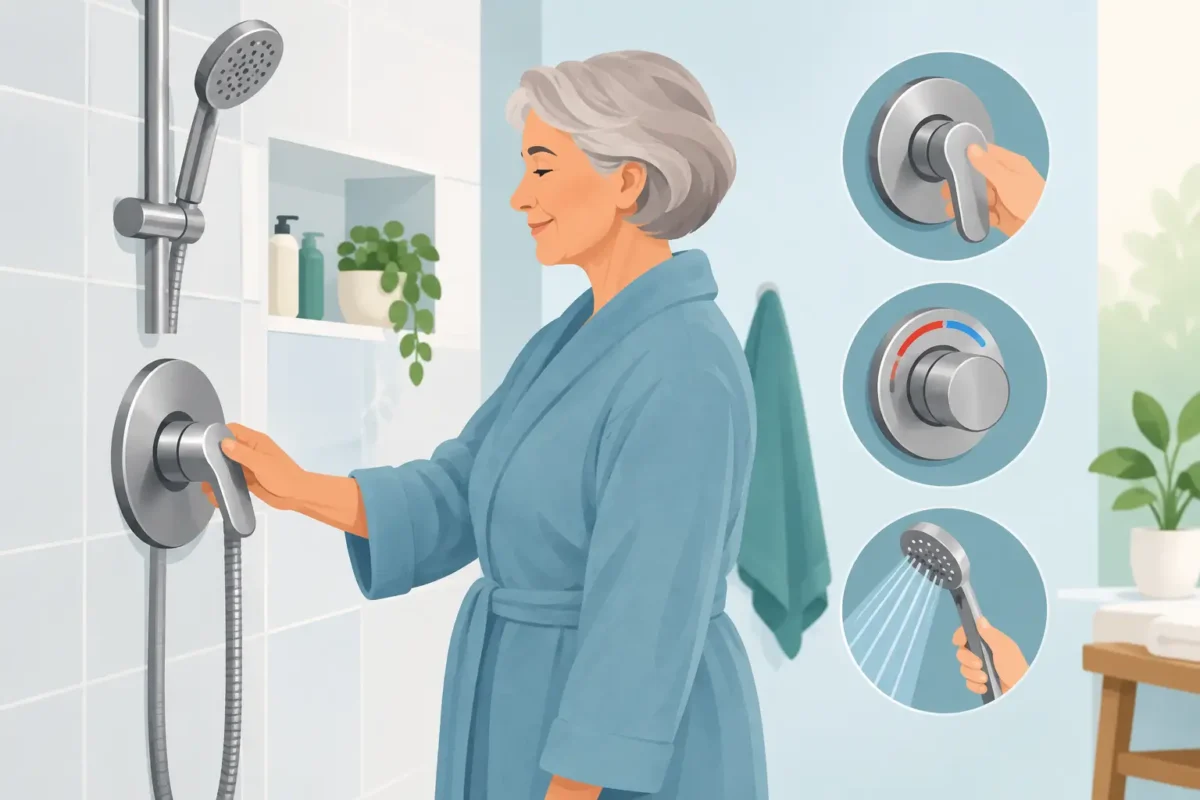
A stiff wrist should not turn a morning shower into a painful task. The best shower controls for arthritis reduce the gripping, twisting, reaching, and temperature adjustments that can make bathing difficult. For many homeowners, replacing a hard-to-turn knob is a small bathroom change with a meaningful effect on comfort, safety, and independence.
The right control setup depends on where arthritis affects you most and how the rest of the shower is used. A person with painful fingers may need a different solution than someone with shoulder limitations, balance concerns, or reduced hand strength. The goal is simple: make it easy to start the water, set a safe temperature, and adjust the spray without strain.
What Makes a Shower Control Arthritis-Friendly?
Traditional round shower knobs demand a firm pinch grip and a twisting motion. That is exactly the movement many people with arthritis find difficult, especially early in the day when joints may be stiff. Controls designed for accessibility replace that motion with larger surfaces, easy pushes, or simple lever movements.
An arthritis-friendly shower control should be easy to identify, operate with a palm or forearm when necessary, and reach from a comfortable position. It should also help prevent sudden changes in water temperature. A control may look stylish, but it is not the best choice if it requires a tight grip every time someone showers.
Placement matters as much as the handle itself. Controls installed directly under the showerhead can force a homeowner to stand in the spray and reach overhead before the water temperature is comfortable. In a custom accessible shower, the main controls can often be placed near the entrance so the water is started and adjusted before stepping fully inside.
Lever Handles Are Often the Best Starting Point
For most households, a single-handle lever is the most practical shower control for arthritis. Instead of grasping and turning a round knob, the user moves one handle up, down, left, or right. This motion can usually be done with an open hand, the side of the hand, or even an elbow when finger joints are especially sore.
Look for a lever with enough length to provide leverage without extending so far that it gets in the way. A handle with a gently curved or textured shape can be easier to use when hands are wet. Avoid very small decorative levers, since they can create the same gripping challenge as a knob.
Single-handle controls are also easier to understand for guests, spouses, and caregivers. One control manages the flow and temperature, which reduces confusion in a household where more than one person uses the shower.
When two handles may still work
Two-handle controls separate hot and cold water, and some homeowners prefer their familiar appearance. However, they require both hands or repeated adjustments to find a comfortable temperature. They can work for someone with mild arthritis and good hand mobility, but they are generally less convenient as joint pain or stiffness progresses.
If a two-handle system is already in place, replacing only the handles may help temporarily. For a long-term accessibility renovation, a single lever with reliable temperature protection is usually the more comfortable investment.
Thermostatic Controls Add Safety and Consistency
A thermostatic shower valve maintains a selected water temperature even when someone flushes a toilet, starts a washing machine, or uses a sink elsewhere in the home. That protection is valuable for anyone, but it is especially useful for people with arthritis who may not be able to react quickly to sudden hot water.
With a thermostatic system, the user can set a preferred temperature and make smaller adjustments as needed. Many models include a safety stop that prevents the handle from moving into an overly hot range without a deliberate push of a button. This feature helps lower the risk of scalding while still allowing a household to choose a warmer setting when appropriate.
Some thermostatic controls use separate handles for temperature and water volume. That can be a good arrangement when the handles are large and easy to operate, because the preferred temperature can remain set while the water is simply turned on and off. It does add another control, though, so it is worth considering whether the person using the shower will find that extra step helpful or frustrating.
A Handheld Showerhead Should Be Easy to Switch On
A handheld showerhead is one of the most useful additions to an accessible bathroom. It allows the spray to be directed where it is needed, making it easier to rinse without excessive bending, turning, or lifting the arms. It also supports safer seated bathing when paired with a sturdy shower seat.
The diverter control that switches water from a fixed showerhead to a handheld unit deserves careful attention. Small pull-up pins and tight twist knobs can be difficult for arthritic hands. A large lever diverter, a push-button diverter, or a clearly marked integrated control is usually easier to manage.
In many custom showers, homeowners choose both an overhead showerhead and a handheld unit. This arrangement gives family members flexibility while keeping a practical option available for the person with mobility or hand limitations. The handheld hose should be long enough to reach a seated bather, but not so long that it tangles underfoot.
Consider Push-Button and Digital Controls Carefully
Push-button shower controls can be helpful for users who have trouble twisting or pulling. A large, lightly activated button may be easier to press with the palm than a conventional handle is to turn. These systems can be a strong choice when hand strength is limited.
Digital controls are another option. Depending on the system, they may offer clearly marked buttons, preset temperatures, remote controls, or voice operation. For some homeowners, especially those with severe arthritis, preset settings reduce daily effort considerably.
There are trade-offs. Digital controls generally cost more than standard fixtures and may require electrical work, batteries, or specialized servicing. Small touchscreen displays can also be difficult for someone with poor vision or reduced fingertip sensitivity. Technology should make bathing simpler, not add another complicated device to manage. A dependable lever and thermostatic valve are often the better fit for a straightforward, long-lasting bathroom remodel.
Control Location Can Prevent Reaching and Slipping
Even the best handle will not help much if it is placed where the user cannot comfortably reach it. In a walk-in shower, controls positioned near the entry allow the water to warm up before the bather steps onto the wet floor. They can also be placed at a height that works from both standing and seated positions.
A lower placement may be helpful for a homeowner who uses a shower chair, while a slightly higher location may better suit a standing user. In multigenerational homes, an experienced remodeler can help find a middle ground that works for everyone. The answer is rarely a one-size-fits-all measurement.
Keep controls away from areas where a person must lean around a glass panel or reach past a grab bar. Grab bars should support balance and movement, but they should not block access to the controls. Planning these details together creates a shower that feels natural to use rather than crowded with accessibility features.
Pair Controls With Other Comfort Features
Shower controls work best as part of a safer bathing space. A curbless or low-threshold entry reduces the need to step over a high tub wall. Slip-resistant flooring provides better footing, and properly installed grab bars offer support when entering, turning, or sitting down.
A built-in bench or fold-down seat can make a significant difference for someone whose arthritis affects the knees, hips, back, or feet. When a person can sit comfortably, a handheld showerhead and reachable controls become even more effective. Good lighting is also valuable, particularly around handle markings and the shower entry.
For homeowners who prefer soaking to showering, a walk-in tub may be a better solution. Inward-swing door tubs and walk-in tubs provide an alternative for those who find standing in a shower painful or tiring. The right choice comes down to bathing preferences, available space, mobility needs, and the condition of the existing bathroom.
Choosing Controls for a Remodel, Not Just Today
Arthritis can change over time, so it helps to choose shower controls with future comfort in mind. A fixture that feels manageable today may become harder to use after a flare-up, surgery, or a change in mobility. Selecting a larger lever, thermostatic temperature control, and accessible placement can help a bathroom serve its owner longer.
Quality installation is equally important. Shower valves sit behind finished walls, and correcting a poorly chosen or poorly installed control later can mean opening the shower again. Camden Enterprises helps Eastern Shore homeowners plan accessible shower renovations around their daily routines, from control selection and placement to safer entries, seating, and durable finishes.
The most helpful shower control is the one you can use without bracing for pain, rushing to avoid hot water, or asking for assistance. A thoughtful bathroom update can give you a calmer start to the day and make staying comfortably at home feel more achievable.