
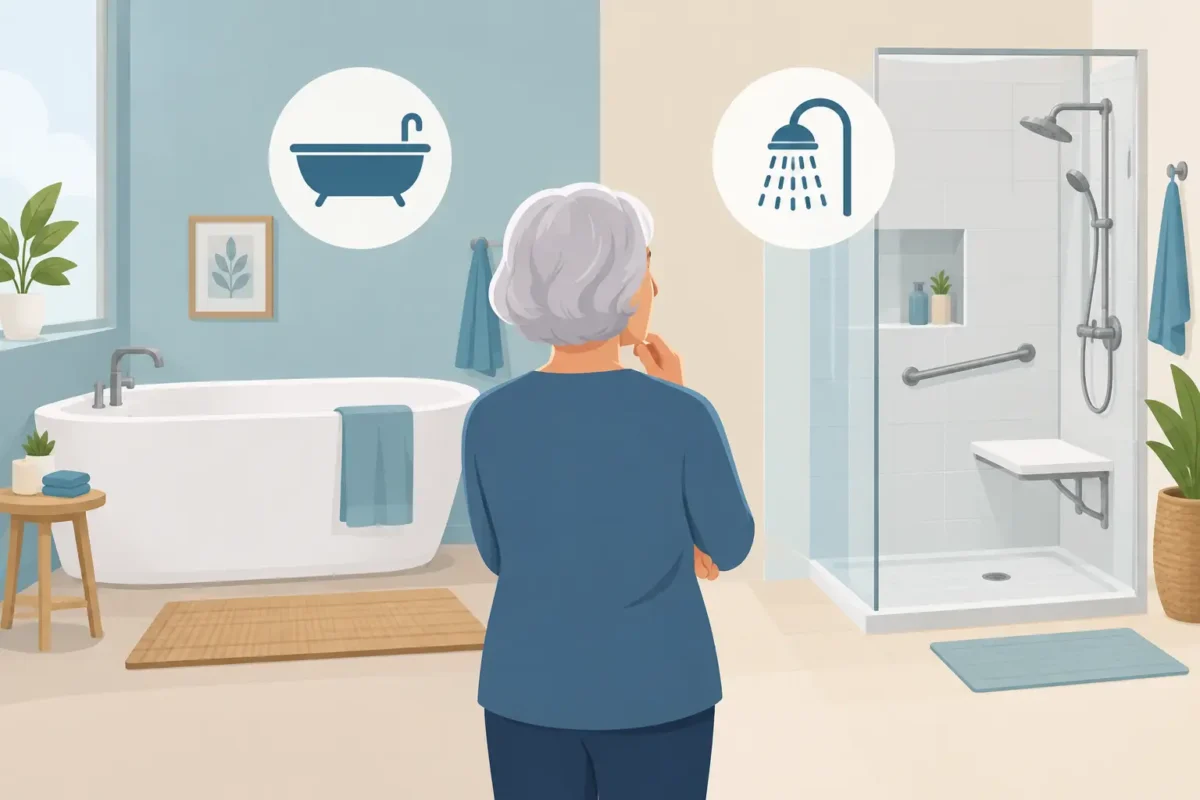
A bathroom can look perfectly familiar and still become the hardest room in the house to use safely. Stepping over a high tub wall, lowering into a deep basin, standing on a wet floor, and reaching for controls can all become more difficult after a change in balance, strength, joint comfort, or mobility. When considering bathtub versus shower safety, the right answer is not always the newest-looking fixture. It is the bathing setup that lets the person using it feel secure, comfortable, and independent every day.
For many Eastern Shore homeowners, this decision starts after a close call: a slip while getting out of the tub, a spouse needing an arm for support, or a parent who no longer feels confident bathing alone. A thoughtful bathroom remodel can reduce those daily risks without making the room feel clinical or impersonal.
Bathtub Versus Shower Safety: The Main Difference
The largest safety difference between a conventional bathtub and a shower is the threshold. A standard tub usually requires someone to lift one leg over a wall that may be 14 to 18 inches high, then shift their weight onto a wet surface before bringing the other leg through. That movement calls for balance, hip mobility, and reliable leg strength.
A shower with a low threshold or curbless entry removes much of that challenge. Rather than stepping over a tall wall, the user can walk in with a much smaller step or roll in with a mobility device when the shower is designed for that purpose. For someone with arthritis, neuropathy, Parkinson’s disease, a past stroke, or simply less steady footing than before, reducing that step can make a meaningful difference.
That does not mean every bathtub is unsafe or every shower is automatically safe. A conventional shower with a slick floor, a narrow opening, or no stable grab bars can still create a fall hazard. Safety depends on the entire bathing experience: entry, footing, seating, controls, lighting, and the room around the fixture.
Where Traditional Tubs Create Risk
Traditional tubs remain useful for households with young children, people who enjoy soaking, or bathrooms where space is limited. But they can be a poor fit when safe entry and exit have become a concern.
The tub wall is usually the first obstacle. Even a person who can walk comfortably through the house may struggle to clear it while wet, tired, or unsteady. Holding onto a towel bar, shower door, or nearby vanity for support is especially risky because those items are not designed to hold a person’s weight.
The second concern is the transition from standing to sitting and back again. A deep tub requires the user to lower themselves onto the bottom or onto a bath seat, then rise again on a potentially slippery surface. Knee, hip, back, and shoulder limitations can turn this routine movement into a difficult one.
A bathtub also limits how much assistance a caregiver can provide. In a tight bathroom, there may be little room for another person to stand safely beside the tub. That can be frustrating for both the homeowner and the family member trying to help.
When a Walk-In Tub Is the Better Choice
For homeowners who still value a warm, seated soak but cannot safely step over a standard tub wall, a walk-in tub can be an excellent middle ground. These tubs use a watertight door and a built-in seat, allowing the bather to enter through a low doorway rather than climbing over a high side.
The seated position can be more comfortable for people with limited stamina or painful joints. Built-in grab bars, textured flooring, hand-held shower wands, and easy-to-reach controls can further improve safety. An inward-swing door tub may be especially practical in a bathroom where space outside the tub is limited.
There are trade-offs to consider. A walk-in tub requires the bather to enter before the tub fills and remain inside while it drains. That may not suit someone who gets chilled easily or wants a quick shower routine. The door design also needs to match the user’s mobility and the bathroom layout. A professional assessment helps determine whether a particular walk-in tub will truly make daily bathing easier.
Why Accessible Showers Often Work for More People
A well-designed accessible shower is often the most flexible choice for aging homeowners and multigenerational households. A low-entry or curbless shower can accommodate someone who walks independently today while also being easier to use later with a walker, shower chair, or caregiver nearby.
The shower should be large enough to move comfortably without feeling crowded. A built-in bench or securely installed fold-down seat gives the user the option to sit rather than stand through the entire shower. A hand-held showerhead allows water to be directed where it is needed without twisting or reaching.
For many families, a tub-to-shower conversion improves more than safety. It can open up a small bathroom visually, simplify cleaning, and create a more modern, practical routine. The best designs do not look like institutional spaces. They can use attractive wall surrounds, tile, fixtures, and glass options while still prioritizing easy access.
Safety Features That Matter in Either Option
Whether you choose a walk-in tub, accessible shower, or keep a conventional fixture, the details have a major effect on fall prevention. The following features work best when planned as one complete system:
- Slip-resistant flooring or textured tub and shower surfaces that provide footing even when wet.
- Professionally anchored grab bars placed where a person naturally needs support when entering, sitting, standing, and exiting.
- A built-in seat or sturdy shower chair that lets the user bathe while seated when standing is tiring or unsafe.
- A hand-held showerhead with an easy-to-use control so the user can avoid overreaching or turning awkwardly.
- Lever-style faucet handles or accessible controls that are simple to operate with limited hand strength.
- Bright, even lighting that reduces shadows around the threshold, floor, and controls.
Outside the bathing area, consider the path to the bathroom as well. Loose rugs, clutter, poor lighting, and a narrow doorway can undermine the benefits of a safer tub or shower. A remodel is a good opportunity to look at the full room, including toilet clearance, vanity height, flooring, and door swing.
Choosing Based on the Person, Not Just the Room
The safest choice depends on who uses the bathroom now and what their needs may be in the years ahead. A homeowner with sore knees who loves soaking may feel safer and more comfortable in a walk-in tub. Someone with balance concerns, a walker, or a caregiver assisting them may benefit more from a spacious accessible shower with a low threshold and seating.
It also helps to consider how many people use the bathroom. A shared hall bath may need a versatile shower that works for adults, visiting relatives, and grandchildren. A primary bathroom may be the right place for a walk-in tub designed around one homeowner’s daily routine.
Avoid choosing based only on a single feature or a brochure photo. A grab bar does not solve a high step-over problem, and a low shower threshold does not help much if the floor is slippery or there is nowhere to sit. The goal is to create a space that reduces awkward movements and gives the user dependable support at each stage of bathing.
Plan Before an Urgent Need Arises
Waiting until after a fall can make the decision feel rushed. Planning an accessible bathroom while the homeowner can participate fully in the choices often leads to a better result. It gives the family time to compare layouts, select finishes they enjoy, and make practical decisions about budget and timing.
A qualified bathroom remodeling contractor can evaluate the existing plumbing, room dimensions, structural needs for grab bars, drainage requirements, and the best entry style for the household. This is especially valuable in older homes, where walls and floors may need preparation before an accessible fixture is installed.
For homeowners across Maryland’s Eastern Shore, Camden Enterprises approaches these projects with the understanding that safety should not require giving up comfort or the feeling of home. A personalized consultation can turn an unsafe daily routine into a bathroom that supports independence with confidence, one comfortable step at a time.