
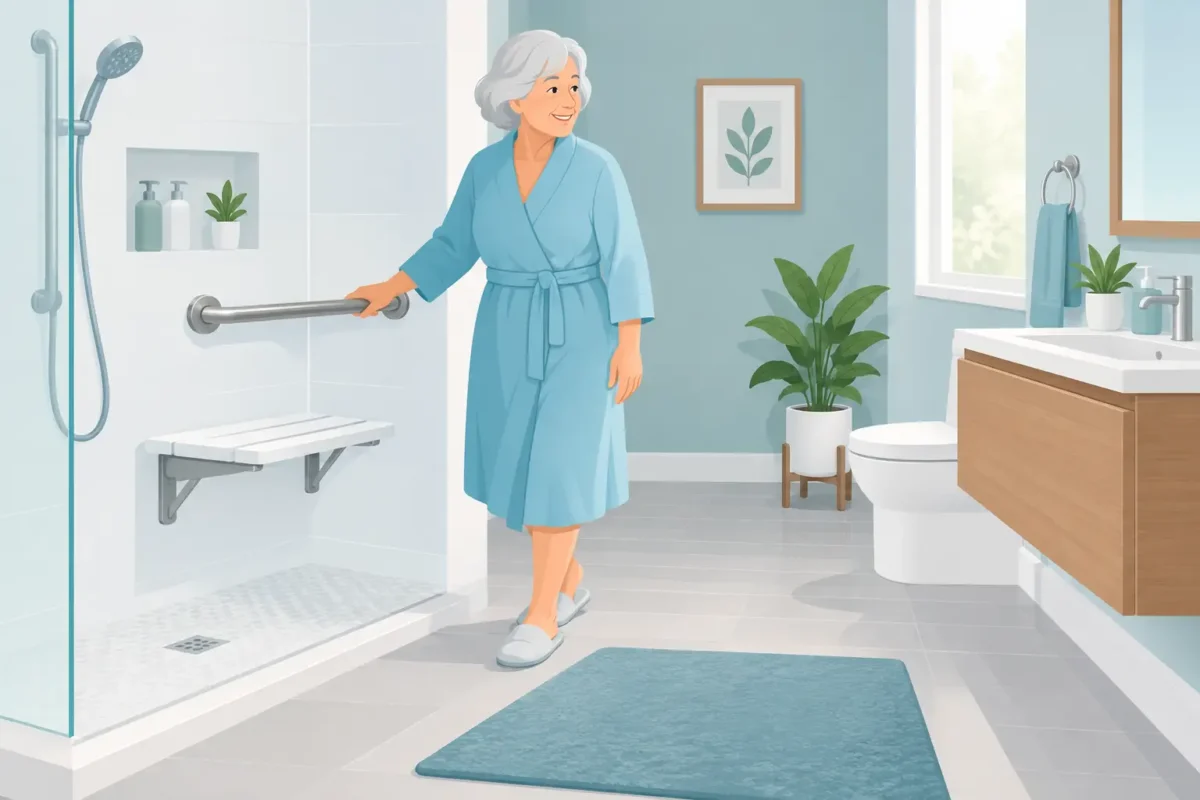
A bathroom can feel familiar enough that small hazards are easy to overlook: a wet tile floor after a shower, a high tub wall, a towel placed just out of reach, or a dim light during a nighttime visit. Yet these ordinary details can become serious risks when balance, strength, vision, or mobility changes. Learning how to prevent bathroom falls is less about making a home feel clinical and more about making everyday routines safer, easier, and more comfortable.
For many homeowners and families on Maryland’s Eastern Shore, the goal is simple: continue living independently in the home they know and love. A few immediate changes can reduce risk right away. When the bathroom no longer fits the person using it, a thoughtful accessibility renovation can provide a more lasting answer.
Start With the Places Where Falls Usually Happen
Bathrooms bring together hard surfaces, water, tight turning spaces, and frequent changes between sitting, standing, and stepping. The highest-risk moments are often getting into or out of a tub, standing from a toilet, turning in a wet shower, and walking across a damp floor.
Walk through the room as it is actually used, not as it appears when it is clean and empty. Consider what happens early in the morning, after a tiring day, or when someone needs to use the bathroom at night. Is there a stable place to hold on while stepping into the tub? Can a person reach towels, soap, and medications without twisting or stretching? Does the door, vanity, or toilet leave enough room to turn with a walker or for a caregiver to assist if needed?
This kind of practical review often identifies the changes that will make the greatest difference. Safety is not always one major feature. It is often a series of small, well-placed decisions that make a routine feel more secure.
Reduce Slips Before They Start
Water on the floor is one of the most common bathroom hazards. Use nonslip mats with rubber backing outside the tub or shower, and replace them when the backing no longer grips the floor. Avoid loose throw rugs that can bunch up, slide, or catch a toe. Inside the bathing area, a properly fitted nonslip surface can improve footing, but it should be kept clean since soap residue can reduce traction.
Good lighting matters just as much. Replace dim bulbs, add brighter overhead lighting where appropriate, and consider a night-light or motion-sensor light for the path from the bedroom to the bathroom. A person should be able to see the floor, the toilet, and the shower controls clearly without having to fumble for a switch in the dark.
Keep the floor clear. Laundry baskets, bathroom scales, decorative stools, electrical cords, and extra storage can narrow an already tight path. Store frequently used items at waist level whenever possible. Reaching high into a cabinet or bending to the floor while standing on a slick surface creates an unnecessary risk.
Install Support That Can Carry Real Weight
Towel bars, shower doors, and vanity counters are not designed to support a person’s body weight. They may look convenient in the moment, but grabbing one during a slip can cause more harm if it pulls loose.
Properly installed grab bars offer dependable support when placed in the right locations. Many bathrooms benefit from grab bars near the toilet and in the bathing area, particularly at the entry and along the wall where a person stands or turns. The best placement depends on the user’s height, dominant hand, mobility level, and the layout of the room.
Style does not have to be sacrificed for safety. Grab bars are available in finishes and profiles that coordinate with modern fixtures, and some accessories are designed to provide support while serving another purpose. What matters most is secure installation into appropriate wall framing or with a rated mounting system. A professional can help determine locations that are both useful and structurally sound.
Make Bathing Easier, Not More Risky
The tub wall is often the biggest obstacle in an older bathroom. Lifting one foot over a high edge requires balance, hip mobility, and confidence. Doing it on a wet surface while holding a towel or trying to steady oneself can quickly become unsafe.
A shower chair or bath bench may help some people bathe more comfortably in the short term, especially when paired with a handheld showerhead. It is important to choose a stable model that fits the space and to make sure it does not create a difficult transfer in a cramped tub. A portable solution can be helpful, but it does not remove the challenge of stepping over the tub wall.
For homeowners who plan to remain in their home, a tub-to-shower conversion is often worth considering. A low-threshold or barrier-free shower can reduce the need for high stepping while creating more usable room for seating, grab bars, and caregiver assistance. A handheld showerhead, built-in bench, easy-to-reach controls, and slip-resistant flooring can make the space more comfortable for people with a wide range of mobility needs.
A walk-in tub can be another good option, particularly for someone who prefers soaking and can safely use the built-in seat. These tubs have a watertight door that allows the user to enter with a much lower step than a traditional tub. The trade-off is that the user generally needs to sit inside while the tub fills and drains, so it is important to consider personal comfort, bathing preferences, and how long someone is willing to wait. An inward-swing door model may be especially useful where bathroom space is limited.
There is no single right choice for every household. The best bathing solution is the one that matches the person’s daily routine, physical needs, available space, and long-term plans for the home.
Improve Toilet Safety and Comfort
Standing up from a low toilet can strain the knees, hips, and back, especially for someone with arthritis, weakness, or limited balance. A comfort-height toilet or a properly secured raised seat may reduce the distance required to sit and stand. Support bars near the toilet can offer added stability without requiring a person to pull on a towel rack or nearby counter.
Clear floor space is also valuable here. A bathroom that feels manageable for one person may be difficult when a walker, wheelchair, or caregiver enters the picture. During a remodel, adjusting the layout, widening access where feasible, or selecting a more compact vanity can create meaningful room to move.
Consider Health Changes Alongside Home Changes
Home improvements are an important part of fall prevention, but they work best alongside attention to health. New dizziness, repeated stumbles, fainting, changes in vision, numbness in the feet, or trouble rising from a chair should be discussed with a healthcare professional. Medication side effects can also affect balance, particularly when prescriptions change.
Families can support a loved one by having an honest, respectful conversation about what feels difficult. Many people minimize a near-fall because they do not want to worry others or feel that they are losing independence. Framing the conversation around comfort and staying at home can make it easier. An accessible bathroom is not a sign of giving up. It is a practical investment in confidence and daily freedom.
Plan a Bathroom That Supports the Future
Temporary fixes can be valuable, especially when a quick safety improvement is needed. But if a bathroom has an inaccessible tub, worn flooring, poor lighting, and limited space, addressing each issue separately may cost more and create more disruption over time. A well-planned remodel can bring these needs together in one design.
Camden Enterprises helps homeowners evaluate accessible bathroom options with a focus on practical fit, quality installation, and personal comfort. Whether the right solution is a custom shower, a walk-in tub, or a conversion from a difficult-to-use tub, the design should reflect the person who will use the space every day. Financing options for qualified buyers can also help families move forward with an improvement that should not be postponed solely because it is a larger project.
The safest bathroom is one that makes the next step feel natural: a dry, clear path under good light; something solid to hold; and a bathing space that no longer asks a person to take a risky step just to get clean.