
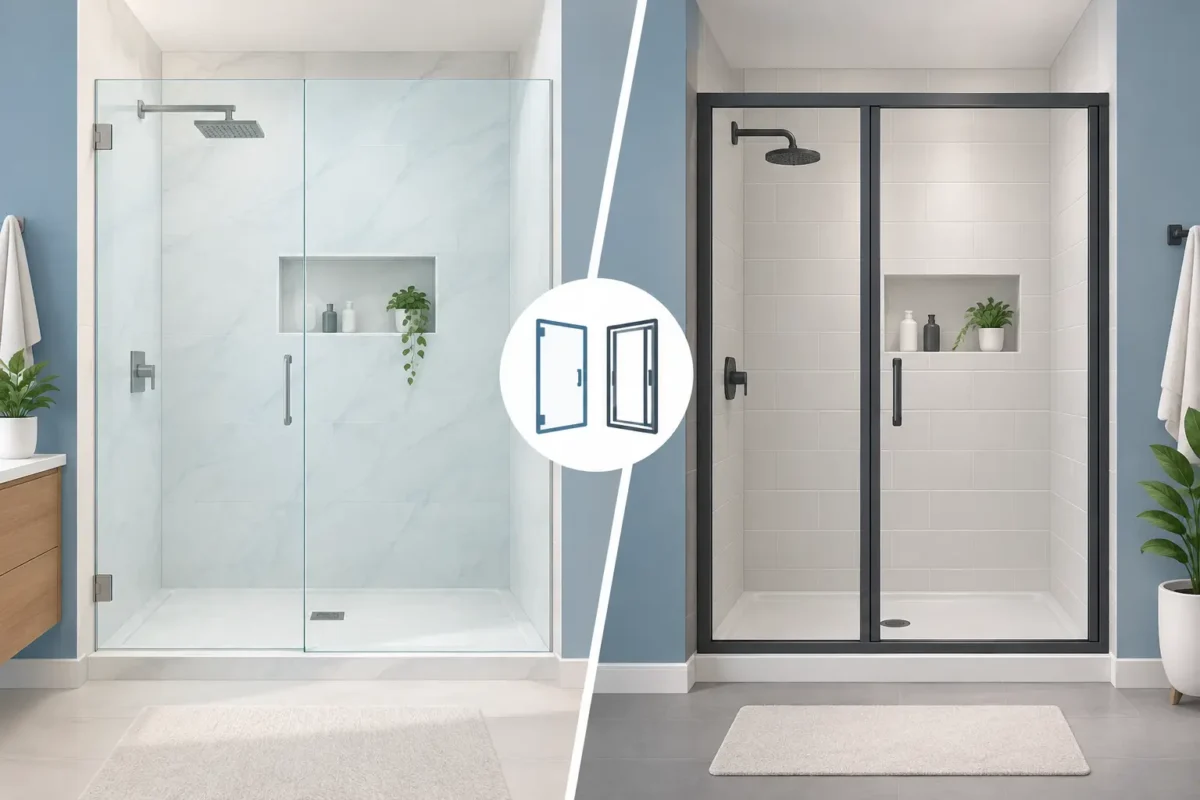
A shower door can change far more than the appearance of a bathroom. When homeowners compare frameless versus framed shower doors, they are usually weighing daily realities: How easy will it be to clean? Will it keep water where it belongs? Can it work with a low-threshold or accessible shower? And will it hold up well for years?
Both styles can be attractive, durable choices when they are properly measured and installed. The better option depends on your shower layout, budget, mobility needs, and the condition of the surrounding walls and floor. A good decision starts with looking beyond the glass.
Frameless Versus Framed Shower Doors at a Glance
A framed shower door has metal around the outer edges of the glass panels and often along the door itself. The frame adds support, allowing the enclosure to use thinner glass. It also includes seals, sweeps, and tracks designed to direct water back into the shower.
A frameless shower door uses thicker, heavier tempered glass with minimal metal hardware. Hinges and clips secure the glass directly to the shower walls and floor or curb. The cleaner lines can make a bathroom feel more open, especially in a smaller space.
Neither option is automatically “better.” A framed enclosure often provides excellent water containment at a lower cost. A frameless door offers a more customized look and may reduce the amount of metal track that needs regular cleaning. The right choice comes down to how your family uses the bathroom.
When a Frameless Shower Door Makes Sense
Frameless doors are popular in custom bathroom remodeling because they let tile, stone, and other finished surfaces remain visible. Without a heavy border around the glass, the shower can feel less enclosed. This can be especially helpful in a bathroom where natural light is limited or square footage is tight.
The glass is generally thicker than framed-door glass, commonly three-eighths inch or one-half inch. It is tempered for safety, meaning it is manufactured to break into small pieces rather than dangerous sharp shards if it fails. However, thicker glass is also heavier, so the walls must be properly prepared to support the hinges and hardware.
Benefits for cleaning and appearance
A frameless design has fewer metal channels and tracks than a traditional framed enclosure. That means fewer places for soap residue, mineral buildup, and moisture to collect. Homeowners still need to squeegee the glass or wipe it down regularly, particularly on the Eastern Shore where hard-water deposits can leave spots, but routine cleaning is often more straightforward.
Frameless doors also offer substantial design flexibility. They can be made for a corner shower, an alcove shower, a neo-angle layout, or a custom enclosure with a fixed glass panel and hinged door. Hardware finishes can be selected to coordinate with faucets, grab bars, lighting, and cabinet hardware.
Consider the trade-offs
A frameless shower door is usually the higher-cost option. The thicker glass, specialized hardware, precise measurements, and installation requirements all affect the price. It also requires a very accurate shower opening. Walls that are out of plumb, uneven tile, or an improperly sloped shower floor can create problems with door alignment and water control.
Minimal hardware does not mean zero gaps. Frameless doors use small clear seals and careful placement to limit water escape, but they do not have the same continuous frame found on many framed units. In a shower with multiple body sprays, a high-pressure showerhead pointed toward the door, or a poorly positioned drain, water management deserves special attention during design.
Why a Framed Shower Door May Be the Practical Choice
Framed shower doors are often a reliable, budget-conscious solution. Because the aluminum frame helps stabilize the panels, the enclosure can use thinner glass and less costly hardware. This can free up room in the remodeling budget for a new shower base, quality tile, a comfort-height toilet, improved lighting, or safety features.
The frame also creates a more defined barrier against water. Bottom tracks, vertical channels, and overlapping door edges can be useful in a busy household where the shower sees frequent use. For a standard tub-shower conversion or an existing shower with dimensions that do not lend themselves to custom heavy glass, a framed enclosure may be the sensible fit.
What maintenance looks like
The main consideration with framed doors is the track. Moisture can remain in lower channels, where soap film and mineral deposits may build up. Regular rinsing and drying help, along with a nonabrasive cleaner suitable for glass and metal finishes.
Sliding framed doors can be useful where floor space is limited because the door does not swing into the bathroom. But tracks need to stay clean for smooth operation, and some homeowners find a sliding door less convenient than a hinged opening. This is particularly relevant for anyone who uses a walker, needs caregiver assistance, or has reduced balance.
Accessibility Changes the Door Conversation
For an accessible bathroom, the best shower entry is not always a traditional door. Safety, clearance, and ease of movement should lead the design process.
A low-threshold or barrier-free shower may work well with a fixed frameless glass panel that leaves a wide walk-in opening. This approach avoids a swinging or sliding door that could limit access. It can also provide room for a shower chair, caregiver support, or a mobility device, depending on the layout.
If a hinged door is part of the plan, its swing direction matters. A door that opens outward can be helpful if someone inside the shower needs assistance, since it is less likely to block emergency access. At the same time, the bathroom must have enough clear floor space for the door to operate without interfering with a toilet, vanity, or mobility equipment.
Framed doors can also be appropriate in accessible remodels, particularly when stronger water containment is needed. Yet a raised bottom track may be a concern for a person with limited foot clearance or balance challenges. The threshold height, shower floor slope, grab-bar placement, seating, and entry width should all be considered together rather than selected one at a time.
At Camden Enterprises, accessible shower planning begins with how the homeowner needs to move through the space every day, not simply with a choice of door style.
Installation Quality Matters More Than the Label
A beautifully designed shower door cannot correct problems underneath it. Whether you choose framed or frameless glass, the shower must be waterproofed correctly, the walls need solid backing where hardware will attach, and the floor must direct water toward the drain.
For frameless installations, accurate measuring is especially critical. Glass is ordered to fit the finished opening, so measurements should be taken after tile and other wall finishes are complete. An experienced installer also checks for wall variation, verifies that hinges have proper support, and positions the door for dependable opening and closing.
For framed installations, correct track placement and sealing are equally important. A door that is not level can slide poorly, leave openings for water, or wear out parts sooner than expected. Quality installation protects the bathroom remodel as a whole, not just the appearance of the enclosure.
Questions to Ask Before You Choose
Before selecting a door, think through how the shower will be used five or ten years from now. A homeowner planning to age in place may value a wider entry and fewer obstacles more than a specific hardware style. A family updating a hall bathroom may place greater importance on easy cleaning and dependable water containment.
Ask whether the shower has enough room for an outward-swinging door, whether the walls can support heavy glass, and whether the threshold supports your mobility needs. Consider who will clean the enclosure and whether the showerhead arrangement could spray directly toward the opening. These details often determine satisfaction long after the tile color has become familiar.
A shower door should make the bathroom easier to use, not add another daily concern. Choosing the style that fits your space, budget, and comfort needs can help create a bathroom that feels safer and more enjoyable every time you step inside.