
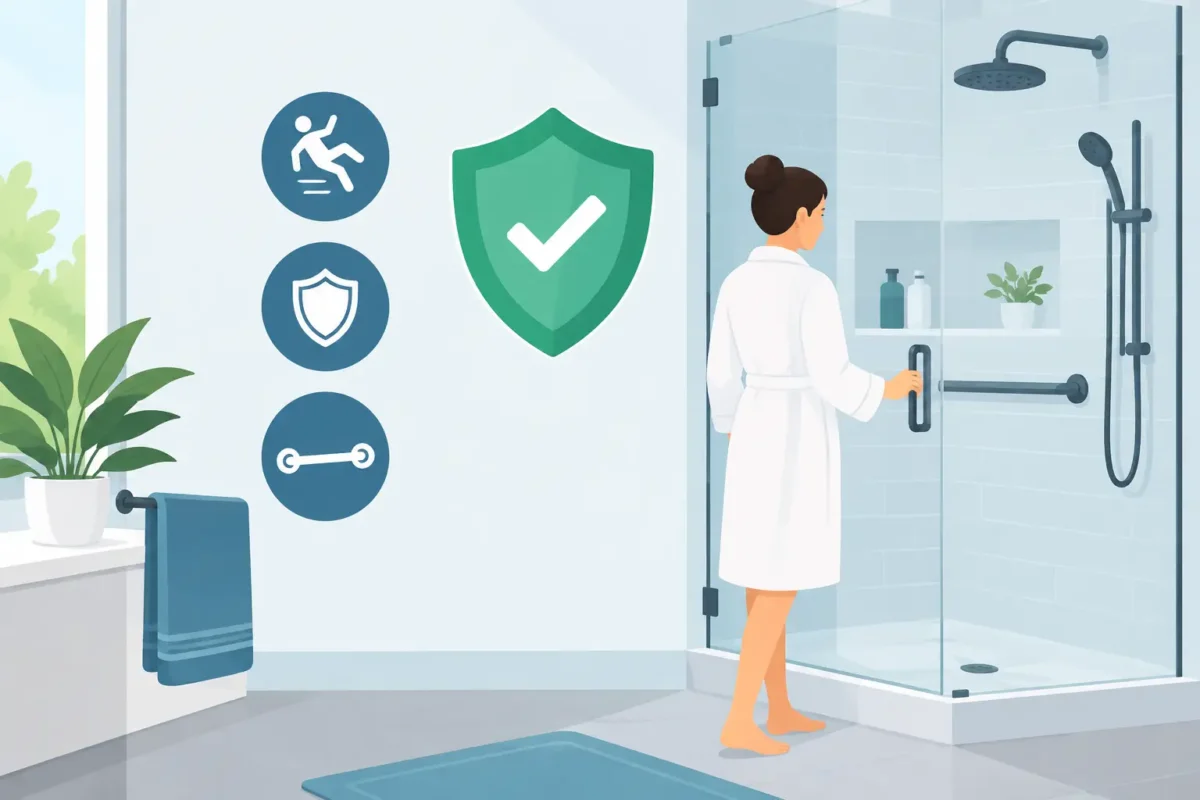
A bathroom can look clean, updated, and comfortable while still creating a daily safety concern. A high tub wall, slick flooring, poorly placed controls, or a shower door that narrows the entry can turn an ordinary routine into a difficult one. Understanding shower safety ratings helps homeowners look beyond appearance and ask better questions about the products and features that will support safe bathing at home.
The first thing to know is that there is no single universal score that tells you whether an entire shower is “safe.” Instead, shower safety comes from several parts working together: the floor surface, water-temperature controls, glass, grab bars, seating, entry design, and quality of installation. The right combination depends on the person using the bathroom, their mobility, and the layout of the home.
What Shower Safety Ratings Actually Measure
When homeowners hear “safety rating,” they may expect something similar to an appliance rating. In bathroom remodeling, the term usually refers to individual product standards and performance measures. A shower base may be evaluated for slip resistance, a mixing valve may be certified to help prevent scalding, and a glass enclosure may meet safety-glazing requirements.
These ratings matter, but they should not be read in isolation. A highly slip-resistant shower floor is helpful, for example, but it cannot make up for a step-in threshold that is too high for someone with balance concerns. Likewise, a properly rated grab bar offers little protection if it is installed in the wrong location or is not securely anchored behind the wall.
For homeowners planning to age in place, recovering from surgery, or helping a parent remain independent, the goal is not simply to buy products with the most labels. It is to create a shower that fits the user safely every day.
Slip Resistance: The Rating Most People Ask About
Wet floors are a leading concern in any bathroom. Shower pans, tile, and other walking surfaces may be described as textured, low-slip, nonslip, or slip resistant. Those terms can be useful, but they are not interchangeable, and no surface is completely slip-proof when water, soap, shampoo, or body oils are present.
Some tile products are tested using a measurement called the Dynamic Coefficient of Friction, often shortened to DCOF. In simple terms, it measures how much traction a surface provides while someone is moving across it. A higher number generally indicates more resistance to slipping under the tested conditions. However, a tile rating alone does not guarantee how that surface will feel under bare, wet feet in a working shower.
The size of the tile and the grout layout also affect traction. Smaller tiles create more grout lines, which can add grip underfoot. Textured shower bases can provide good footing while being easier to clean than heavily textured surfaces. The trade-off is that deep texture may be harder for some people to maintain, especially if mobility or hand strength is limited.
When reviewing shower safety ratings for flooring, ask how the material performs when wet, whether it is intended for shower-floor use, and how it will be cleaned. A qualified bathroom contractor can also help match the surface to the user rather than choosing based on a product sample alone.
A low threshold matters as much as a safe floor
For many households, the transition into the shower is the most dangerous point. Stepping over a traditional tub wall requires balance, leg strength, and a stable place to hold on. A low-threshold or barrier-free shower reduces that obstacle and can make room for a walker, shower chair, or caregiver assistance when needed.
A curbless shower can be an excellent choice, but it requires careful planning for floor slope, drainage, waterproofing, and the home’s existing structure. In some homes, a low-threshold shower base is the more practical and cost-effective solution. The safest choice depends on the bathroom and the person who will use it.
Temperature-Control Ratings Help Prevent Scalds
A sudden burst of hot water can be more than uncomfortable. It can cause a serious burn, particularly for older adults, children, or anyone with reduced sensation in their hands or feet. That is why the shower valve deserves as much attention as the shower walls or fixtures.
Look for a pressure-balancing or thermostatic valve that meets recognized anti-scald performance standards. Pressure-balancing valves help keep the temperature from shifting sharply when someone flushes a toilet or starts a dishwasher. Thermostatic valves maintain a selected temperature more precisely, which can be especially reassuring for households with vulnerable family members.
Neither option replaces thoughtful use. The water heater setting, the condition of the plumbing, and the way fixtures are installed all affect actual water temperature. A good remodeling plan considers the entire system, not only the valve inside the wall.
Glass, Doors, and Entry Space Need Their Own Review
Glass shower enclosures should use safety glass designed to reduce the risk of dangerous breakage. Tempered safety glass is commonly used for shower doors and panels because it is made to break into smaller pieces rather than sharp shards if damaged. Homeowners can ask whether the enclosure meets applicable safety-glazing requirements and whether the hardware is designed for the weight and movement of the door.
Door design also affects accessibility. A swinging door needs clear space in front of the shower and can be difficult to manage if someone needs a walker or assistance. Sliding doors save room in some bathrooms but can reduce the clear opening. A fixed glass panel with an open entry may feel more spacious, though it requires a layout that keeps water contained.
There is no one best enclosure for every bathroom. The practical question is whether the person using the shower can enter, turn, reach the controls, and exit without squeezing past a door or losing balance.
Grab Bars and Shower Seats Are Rated for Support
Decorative towel bars are not safety equipment. If a homeowner might need something to hold during entry, standing, or transfer to a seat, the bathroom should include properly installed grab bars. Quality grab bars are built and tested for substantial support, but their real-world strength depends on secure installation into appropriate wall blocking or structural framing.
Placement matters just as much as capacity. A vertical or angled bar near the entry can assist with stepping in. A horizontal bar along the control wall may help someone lower onto or rise from a shower seat. The best locations depend on whether the user stands independently, uses a mobility aid, or needs caregiver support.
Built-in and fold-down seats should also be evaluated by their stated weight capacity, attachment method, and ease of cleaning. A seat that is too narrow, too high, or difficult to reach may not solve the problem. When possible, plan the shower around the user’s height, movement, and preferred bathing routine.
Why Accessible Design Standards Are Useful in Private Homes
Many accessibility guidelines were created for public spaces, but their principles are valuable for residential remodeling. They address features such as wider entries, reachable controls, stable seating, clear floor space, handhold placement, and manageable thresholds.
A private home is not always required to follow every commercial accessibility dimension. In fact, forcing a public-space layout into a small bathroom may not be the best answer. Still, these standards provide a proven starting point for conversations about safe design. A custom shower can be adapted to the home while borrowing the features that make bathing easier and more secure.
The Installation Is Part of the Safety Rating
A product can carry strong safety credentials and still fail to protect the homeowner if it is installed carelessly. Improper floor slope can leave standing water. Weak wall backing can compromise a grab bar. An incorrectly fitted shower door can bind, leak, or create an awkward entry. Poor waterproofing can lead to hidden damage that makes a future remodel more complicated and expensive.
That is why homeowners should evaluate the installation plan alongside the product specifications. Ask who will assess the bathroom, how the shower will be waterproofed, where grab-bar backing will be placed, and how the final layout will support safe use. Certified installation experience is particularly valuable for walk-in showers, tub-to-shower conversions, and accessible bathing solutions.
Camden Enterprises helps Eastern Shore homeowners weigh these details in a practical way, from safer shower entries and durable wall systems to accessible seating and properly placed support features.
Choosing Safety Features for Your Household
Start with the person who needs the most support now, while allowing for needs that may change over time. A homeowner with mild knee pain may benefit from a low-threshold shower and handholds today. Someone with significant balance concerns may need a wider entry, a seated bathing option, anti-scald controls, and room for caregiver assistance.
It also helps to consider the full routine. Where will towels be placed? Can the user reach the controls before stepping into the water? Is there a stable surface immediately outside the shower? Will the floor remain manageable when wet? Small decisions around the shower often determine whether the room feels confidently usable or unnecessarily risky.
A safer bathroom should never feel clinical or impersonal. With the right materials, layout, and installation, it can be a welcoming space that protects independence without giving up comfort. The most meaningful shower safety rating is the confidence a homeowner feels using the space every morning and evening.