
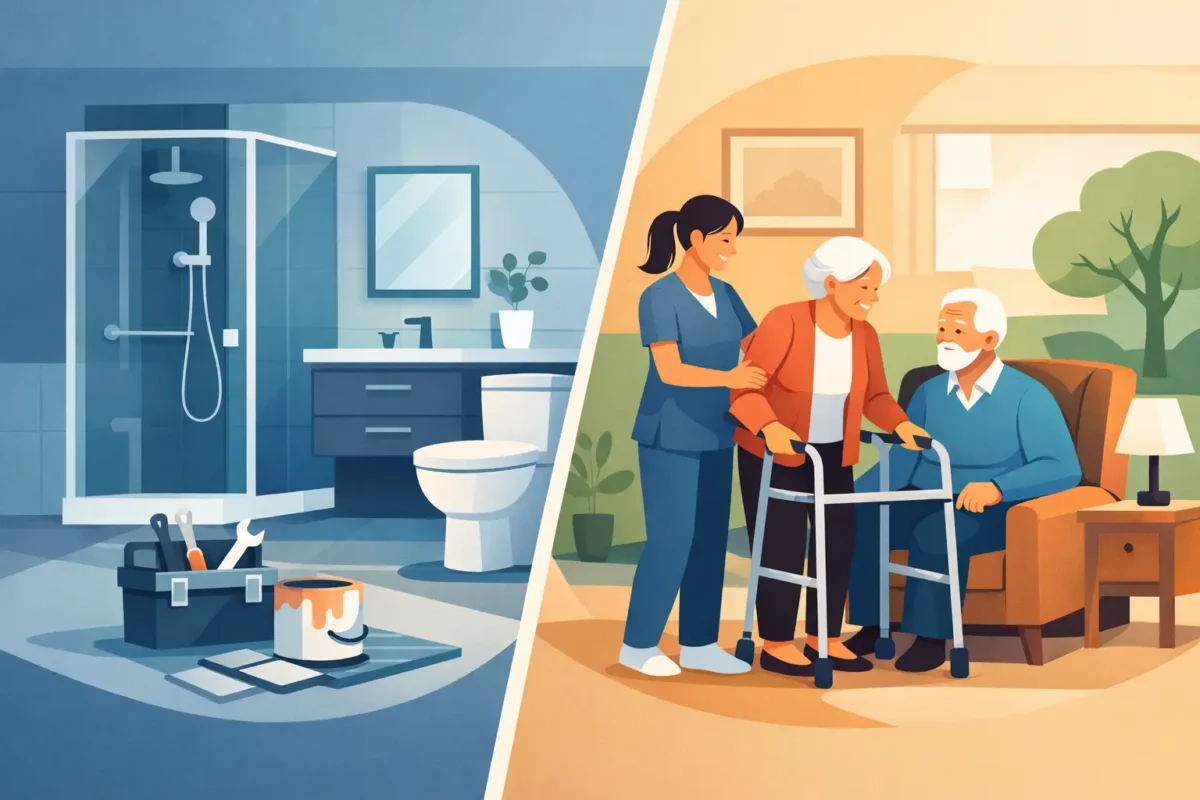
A difficult bathing routine can change a family conversation quickly. What began as a high tub wall, a slippery floor, or concern about a loved one showering alone may become a question of bathroom renovation versus assisted living. The right answer is not always the same, but it should begin with an honest look at safety, care needs, finances, and the person’s desire to remain at home.
For many homeowners on Maryland’s Eastern Shore, an accessible bathroom can remove one of the biggest daily barriers to independent living. For others, a bathroom upgrade is only one part of a larger care plan. Looking at both choices clearly can help families move forward without pressure or assumptions.
Bathroom Renovation Versus Assisted Living: Start With Care Needs
A bathroom renovation can make bathing safer and more comfortable, but it cannot provide around-the-clock personal care, medication management, meal service, or supervision. That distinction matters. If someone is generally able to manage daily life but struggles with stepping over a tub wall, standing for a shower, or maintaining balance on wet surfaces, an accessibility-focused renovation may be a practical and meaningful solution.
A tub-to-shower conversion, low-threshold shower, properly placed grab bars, built-in seating, handheld showerhead, and non-slip flooring can make a familiar bathroom work better as mobility changes. A walk-in tub may also be a good fit for someone who enjoys bathing but can no longer safely step into a conventional tub. The goal is not simply to update the room. It is to reduce the risk and strain built into an everyday routine.
Assisted living may be the better choice when bathing difficulty is part of a broader need for regular support. Frequent falls, confusion, missed medications, difficulty preparing meals, wandering, or an inability to respond to an emergency alone may point beyond what home modifications can address. In that situation, an accessible bathroom can still help in the short term, but it should not be treated as a substitute for the level of care a person needs.
Questions families should ask first
Before comparing estimates or touring communities, consider how much assistance is needed on an ordinary day. Can the person transfer safely from sitting to standing? Do they need help only in the bathroom, or throughout the home? Is a family member providing care, and is that arrangement sustainable? Has a doctor, therapist, or home health professional raised concerns about safety?
These questions are not meant to push someone out of their home. They help identify whether a renovation can solve the central problem or whether additional support is needed alongside it.
What an Accessible Bathroom Can Change
Bathrooms are often the smallest rooms in the house and among the most hazardous. A standard tub requires lifting a foot over a high edge while balancing on a wet surface. Narrow doorways can make walker or wheelchair access difficult. Low toilets and limited turning space can turn a private task into a frustrating one.
A well-planned renovation addresses those obstacles in a way that fits the homeowner and the home. For example, a custom shower can be designed with a low or no threshold, a bench, grab bars anchored correctly into the wall, and controls that are easier to reach. Wider access and a more open layout may help a caregiver assist when necessary without making the bathroom feel institutional.
The benefit is often emotional as well as practical. Many people value being able to bathe privately, use a bathroom with confidence, and remain in the community they know. They may want to stay close to neighbors, family, church, routines, and the home they have spent years building. An accessible remodel supports that independence when the rest of the person’s needs can still be met safely at home.
It can also improve life for a spouse or adult child. A safer shower and better layout can reduce the physical burden of helping someone bathe. That does not eliminate caregiving demands, but it can make one of the most challenging daily tasks more manageable.
Comparing the Financial Picture
Costs deserve a careful comparison, not a quick one. Assisted living commonly involves an ongoing monthly expense that can increase as a resident requires more care. A bathroom renovation is generally a one-time investment, although the final price depends on the condition of the existing room, plumbing changes, product selection, layout, and the accessibility features required.
A remodeling project may make financial sense for a homeowner who can otherwise live safely at home for years. It can also add function and appeal to the property for future household members. Still, families should avoid assuming that any renovation automatically costs less than assisted living. If extensive daily care, transportation, housekeeping, and medical support are already needed, those ongoing needs must be included in the calculation.
Ask for clear information from both sides. A remodeling consultation should explain the work involved, the products being installed, and the practical purpose of each feature. An assisted living community should explain its base charges, service tiers, additional care fees, and what happens if needs change. Comparing incomplete numbers only makes a stressful decision harder.
For qualified buyers, financing can make an accessibility project more manageable by spreading costs over time. That may be especially helpful when a bathroom change is needed promptly after a fall, surgery, or mobility diagnosis. The important point is to choose a payment approach that supports the household’s long-term plan, not just the immediate emergency.
When Staying Home Is the Stronger Option
Home remodeling is often a strong choice when the person wants to age in place, has a reliable support network, and needs targeted help with bathing or mobility rather than constant care. It is also worth considering when the home is otherwise workable. A first-floor bedroom, manageable entryway, accessible kitchen, and nearby family can all make remaining at home more realistic.
The best results come from planning ahead. Waiting until after a serious fall can limit choices and create pressure to accept a temporary solution. Homeowners who notice a growing hesitation around the tub, a need to hold onto towel bars, or fear of showering when alone should treat those signs seriously. Small concerns can become serious safety risks when ignored.
Camden Enterprises helps homeowners evaluate practical bathroom solutions, from walk-in tubs and accessible showers to custom shower construction and tub-to-shower conversions. A personalized approach matters because the right solution for a person using a walker may be different from the right solution for a couple planning for the future.
When Assisted Living May Offer More Peace of Mind
Assisted living can provide reassurance when a person’s needs extend well beyond the bathroom. The setting may offer regular meals, social opportunities, help with personal care, medication support, transportation, and staff presence. For some families, that dependable structure relieves the worry of trying to coordinate care from a distance or asking one relative to carry too much responsibility.
Choosing assisted living does not mean a family has failed to support independence. Sometimes it is the safest and kindest decision available. It may also be temporary, such as during recovery from illness or while a family determines what level of support will be needed long term.
There are trade-offs, of course. Moving means leaving a familiar home and adjusting to a new schedule, environment, and community. Some people welcome the social connection and reduced household responsibilities. Others experience grief, resistance, or a loss of privacy. Those feelings deserve patience and respect rather than dismissal.
A Practical Way to Make the Decision
Bring the person most affected into the conversation whenever possible. Talk about what feels difficult now, what they are afraid of, and what would make daily routines easier. Then separate the needs that a home renovation can solve from the needs that require human care and supervision.
A professional bathroom consultation can clarify whether the existing space can be adapted safely. At the same time, conversations with health care providers and care professionals can help families understand future support needs. It is reasonable to plan for both: an accessible bathroom now and additional in-home help later, if needed.
The best decision protects safety without overlooking dignity. Whether the next step is a safer shower, a walk-in tub, added care at home, or a move to assisted living, families deserve a plan that gives their loved one as much comfort, confidence, and choice as possible.