
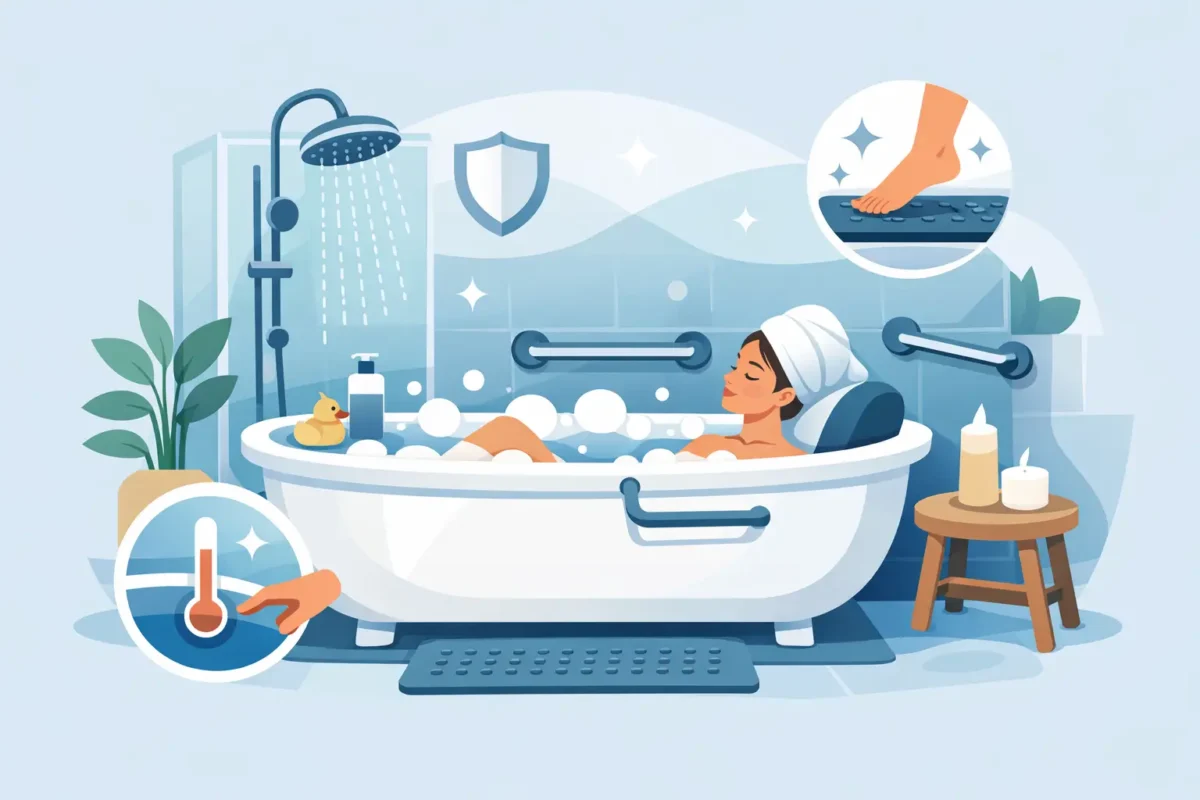
A bathtub that once felt familiar can become difficult to use after a change in balance, strength, flexibility, or mobility. Selecting safe bathtub features is not simply about adding a few accessories. It is about creating a bathing space that lets you or someone you love feel steady, comfortable, and more independent at home.
For many Eastern Shore homeowners, the right solution is also a way to remain in a home they know and enjoy. A well-planned bathroom upgrade can reduce daily worry for the person bathing and for the family members who want to know they are safe.
Start With the Real Challenges in Your Bathroom
Every household has different needs, so the best bathtub features depend on how the space is used today and what may be needed in the years ahead. Begin by looking at the full bathing routine, not just the tub itself. Consider getting into the bathroom, stepping over the tub wall, lowering down, standing back up, reaching the controls, and drying off afterward.
A high tub wall is often the biggest concern. A standard bathtub may require a person to lift one leg over a side that is more than a foot high, then balance on a wet surface. Someone with arthritis, knee pain, dizziness, limited range of motion, or an unsteady gait may find that movement increasingly risky.
The room’s layout matters as well. A narrow doorway, toilet positioned too close to the tub, poor lighting, or slippery flooring can make a good bathtub safety feature less effective. A bathroom remodel should account for the whole path through the room, so the finished space works comfortably rather than forcing a homeowner to adapt around it.
Selecting Safe Bathtub Features That Matter Most
Safety features should be easy to use, securely installed, and suited to the person who will use them. A feature that looks helpful but is placed out of reach or requires too much hand strength may not solve the real problem.
A low-entry or walk-in design
For homeowners who want to continue bathing in a tub, a walk-in tub can greatly reduce the need to step over a high wall. These tubs have a watertight door and a low threshold, allowing the bather to enter with far less leg lifting and balance risk. Many include a built-in seat, which means the user can bathe while seated instead of lowering themselves to the bottom of a traditional tub.
Door style is worth discussing during planning. An inward-swing door can be a practical choice in a compact bathroom because it does not extend into the room when opened. However, the bather must be able to move into the tub before closing the door. The best fit depends on available space, mobility needs, and who may assist with bathing if help is needed.
Walk-in tubs do have a trade-off: the user generally enters before the tub fills and waits inside while it drains. Fast-drain systems can reduce that waiting time, but it remains an important part of the experience to consider.
A secure, comfortable seat
A molded seat is one of the most useful features in an accessible tub. It reduces the strain of sitting down low and standing up again, while providing a stable place to wash. Look for a seat height that allows the user’s feet to rest firmly on the tub floor and makes standing easier.
Some people prefer a deeper soaking experience, while others place a higher value on an upright, supported position. There is no single right answer. The better choice is the one that feels stable and comfortable for the person using it most often.
Properly placed grab bars
Grab bars are not the same as towel bars. A true grab bar is designed to support body weight when it is anchored correctly into wall framing or with an approved mounting system. It should be installed where a person naturally needs support, such as at the entry, beside the seat, and near the controls.
Placement is more important than simply adding several bars. A grab bar set too high, too low, or too far from the user’s natural reach can be difficult to rely on. During a consultation, it helps to talk through how the person enters, turns, sits, and stands. That conversation often reveals exactly where support is needed.
Non-slip surfaces and dependable footing
Textured tub floors help reduce slipping under wet, soapy conditions. This feature is especially helpful for anyone who has trouble feeling steady on smooth surfaces. Outside the tub, a slip-resistant bathroom floor and a securely backed bath mat can provide another layer of protection.
Avoid relying on loose mats or suction-cup products as the primary safety measure. They may shift, lose grip over time, or create an edge that catches a foot. Built-in, durable surfaces tend to provide more consistent protection.
Easy-to-reach controls and a handheld showerhead
A handheld showerhead makes bathing more manageable from a seated position. It allows the user to direct water where it is needed without standing, twisting, or stretching. A long hose and a holder that can be adjusted to a comfortable height are often worthwhile additions.
Controls should be within easy reach from the seat or standing position. Lever-style handles are usually easier for people with arthritis or reduced hand strength than small knobs. Anti-scald valves are another valuable feature, helping maintain a safer water temperature if someone accidentally changes a control or if water pressure shifts elsewhere in the home.
Do Not Overlook Lighting, Storage, and Space
Many bathroom falls happen while reaching for something, turning in a tight area, or navigating a dim room. Good overhead lighting, targeted lighting near the vanity and tub, and clearly visible controls can make the bathroom easier to use. Light switches should be simple to reach from the doorway.
Storage deserves attention, too. Shampoo, soap, towels, and medications should not require bending to the floor or stretching across the tub. Recessed shelving, built-in niches, and reachable cabinetry can keep necessities close without cluttering the bathing area.
If a caregiver may occasionally help, plan enough clear floor space for two people to move safely. This is particularly important in smaller bathrooms, where a tub replacement may need to be coordinated with changes to the vanity, toilet location, or doorway.
When a Shower May Be the Safer Choice
A safer bathtub is not always the best long-term answer. For a homeowner who no longer enjoys soaking or has difficulty transferring onto a tub seat, a tub-to-shower conversion may provide a more practical option. A low-threshold or barrier-free shower, bench seat, handheld showerhead, grab bars, and slip-resistant floor can create a comfortable daily bathing space with fewer steps involved.
The decision often comes down to personal habits. If a household includes young children who need a tub, keeping one bathtub may make sense. If the primary concern is safe, independent bathing for an older adult, an accessible shower may offer the simplest routine. In some homes, it is possible to preserve a tub in one bathroom while making the primary bathroom more accessible.
Choose Installation Quality Along With the Features
Even the best product depends on proper installation. A walk-in tub must be level, sealed correctly, connected to suitable plumbing, and supported by a bathroom layout that allows the door and controls to function as intended. Grab bars need secure mounting. Flooring transitions need to be smooth and stable.
Before beginning a project, ask how the installer will assess plumbing, electrical needs, ventilation, subfloor condition, and the available space. A qualified remodeling team should explain what is included, identify potential challenges before work begins, and help match features to the homeowner instead of pushing a one-size-fits-all solution.
Camden Enterprises approaches accessible bathroom remodeling with that personal planning in mind, helping homeowners across Maryland’s Eastern Shore evaluate walk-in tubs, accessible showers, and custom bathroom improvements based on their daily needs.
A bathroom should not make someone feel rushed, unsteady, or dependent on luck. The right features can turn a stressful routine into a calmer part of the day and help a home continue supporting the people who live there.